Introduction 🌾
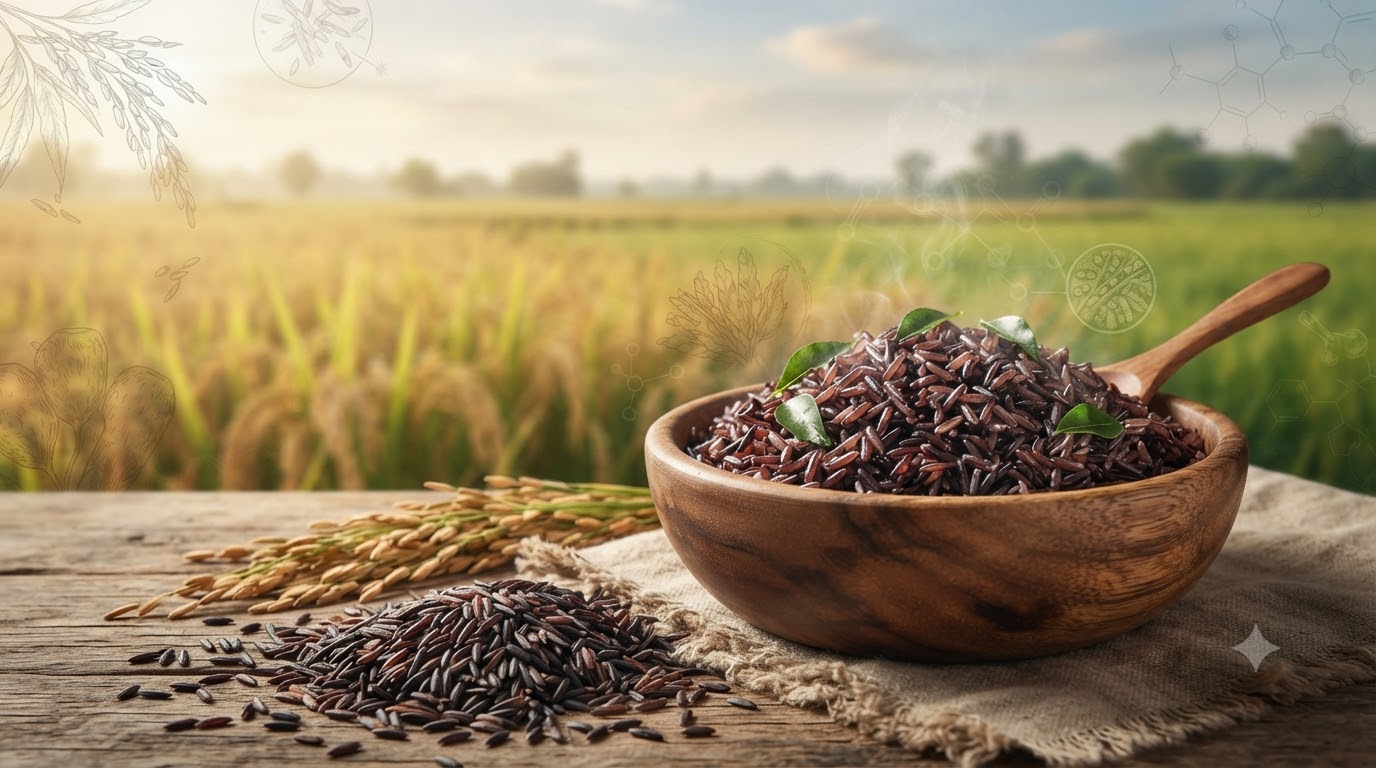
Kalanamak rice, often called “Buddha Rice”, is one of India’s distinctive traditional aromatic rice varieties. Cultivated mainly in the Terai region of eastern Uttar Pradesh, this non-Basmati rice is recognized for its characteristic fragrance, soft cooking quality and dark-colored husk. The variety has a long agricultural and cultural history and has received a Geographical Indication (GI) tag associated with the Siddharthnagar region and adjoining areas. (Wiley Online Library)
Interest in Kalanamak is growing beyond its traditional identity. Researchers are increasingly examining its micronutrients, aroma compounds, antioxidants and metabolomic profile, while agricultural scientists are working to improve productivity without losing its distinctive grain and cooking characteristics.
A particularly notable 2026 study used UHPLC–MS/MS metabolomics to investigate Kalanamak and identified hundreds of metabolites, including amino acids, flavonoids, phenolic acids and aroma-related compounds. The findings provide new scientific information about why this traditional rice has distinctive sensory and biochemical characteristics. (Wiley Online Library)


🌾 What Is Kalanamak Rice?
Kalanamak is an indigenous aromatic, non-Basmati rice landrace associated with the Himalayan Terai region. The name is commonly explained through the words kala meaning black and namak meaning salt, referring to its dark husk.
Unlike conventional white rice varieties, Kalanamak has traditionally been valued for its strong fragrance, distinctive taste and soft cooked texture. Historical accounts associate its cultivation with the Buddhist era, although such historical claims should be understood as part of the variety’s cultural tradition rather than as precisely established archaeological dates. (Wiley Online Library)
The Indian government has also recognized the importance of research and breeding for this traditional variety. ICAR reported research aimed at developing improved Kalanamak-related genotypes with better yield while retaining important grain and cooking qualities. (Indian Council of Agricultural Research)
🧬 Nutritional Value of Kalanamak Rice
One of the reasons Kalanamak has attracted scientific attention is its mineral and nutrient profile.
A 2026 metabolomic study examined both brown and milled Kalanamak samples and found measurable quantities of iron, zinc, magnesium, calcium, manganese, potassium, copper and phosphorus. Importantly, the mineral concentrations varied between samples and between brown and milled rice, demonstrating that growing conditions and processing can influence nutritional composition. (Wiley Online Library)
For example, in the study’s two samples, brown rice contained approximately:
- Iron: 10.45–14.52 ppm
- Zinc: 15.56–19.94 ppm
- Magnesium: 1,024–1,510 ppm
- Potassium: 1,958–2,233 ppm
- Phosphorus: 2,931–3,851 ppm
These figures are from specific experimental samples and should not be treated as a universal nutrition label for every packet of Kalanamak rice. Variety, soil, cultivation conditions, milling and storage can all influence nutrient composition. (Wiley Online Library)
The Siddharthnagar district government’s information on Kalanamak also reports protein, iron, zinc, beta-carotene and other nutrients, although its listed values use a different testing and reporting framework from the 2026 metabolomic study. (Siddharthnagar District)
🥗 Protein and Minerals
Rice is primarily an energy-providing cereal because of its carbohydrate content, but Kalanamak can contribute protein and minerals as part of a balanced diet.
The official Siddharthnagar district information reports approximately 10.6% protein for the product tested by the cited program. The same source reports iron and zinc among its notable nutrients. (Siddharthnagar District)
Minerals such as iron and zinc are important for normal physiological functions. Iron contributes to oxygen transport and normal cellular processes, while zinc supports numerous enzymes and biological functions.
However, eating Kalanamak rice should not be considered a treatment for iron or zinc deficiency. For people with diagnosed nutritional deficiencies, dietary advice should be based on overall dietary intake and, when necessary, professional medical guidance.
🌿 Antioxidants and Bioactive Compounds
Modern research is particularly interested in Kalanamak’s bioactive compounds.
The 2026 study examined brown-rice extracts and reported antioxidant activity using laboratory assays such as DPPH and ABTS. It also identified numerous metabolites belonging to groups including:
- Amino acids
- Flavonoids
- Phenolic acids
- Terpenes
- Amines
- Other plant metabolites
The researchers identified 262 metabolites in one Kalanamak sample and 298 in another, with 325 compounds represented across the samples in their comparative analysis. (Wiley Online Library)
These results are scientifically interesting because antioxidant activity measured in a laboratory extract does not automatically demonstrate a specific health benefit in humans. Human clinical studies would be required to establish whether consuming Kalanamak produces meaningful health outcomes.
🌸 Why Does Kalanamak Have Such a Distinctive Aroma?
Aroma is one of Kalanamak’s most recognizable characteristics.
Rice fragrance is produced by a complex mixture of volatile compounds rather than by a single substance. The 2026 metabolomic research detected compounds including coumarin, eugenol, sabinene and other aroma-associated metabolites in the Kalanamak samples studied. (Wiley Online Library)
This is important because traditional rice varieties can possess distinctive sensory characteristics that are influenced by genetics as well as environmental and agricultural conditions.
The researchers also identified metabolic pathways associated with aroma and plant biochemical processes, including phenylpropanoid biosynthesis and alpha-linolenic acid-related pathways. (Wiley Online Library)
🔬 What Modern Research Is Discovering
Research on Kalanamak is moving in several directions.
1. Metabolomic research
The 2026 study represents an important step toward understanding the biochemical complexity of Kalanamak. Rather than examining only a few nutrients, researchers used advanced metabolomic techniques to characterize hundreds of compounds simultaneously. (Wiley Online Library)
2. Nutrient research
Scientists are examining Kalanamak’s mineral composition, particularly its iron, zinc, magnesium, potassium and phosphorus content. The 2026 study found measurable differences between samples grown in different locations and between brown and milled rice. (Wiley Online Library)
3. Crop improvement
Traditional Kalanamak has historically faced agricultural challenges, including tall plants, lodging, photoperiod sensitivity and relatively low productivity. ICAR reported breeding efforts to develop semi-dwarf, higher-yielding aromatic rice genotypes while maintaining desirable grain and cooking characteristics. (Indian Council of Agricultural Research)
4. Sustainable cultivation
Research published in 2024 found that integrated nutrient management involving recommended fertilizers, farmyard manure, sulfur, zinc oxide and blue-green algae improved growth and yield attributes in field experiments conducted over two Kharif seasons. (Soil Science & Plant Nutrition Journal)
🌱 Kalanamak and Farmers
Kalanamak is important not only nutritionally but also economically.
A 2024 agricultural-marketing study examined Kalanamak cultivation in Uttar Pradesh and identified issues including labour shortages, availability of quality seed, input costs, price fluctuations and limited market information. (Indian Journals)
More recently, the Government of India reported that Kalanamak cultivation and productivity have increased in Siddharthnagar. According to an August 2026 PIB release, production in the district increased more than fivefold between 2018 and 2025, while the reported sale price increased from ₹40/kg in 2018 to ₹150/kg in 2026. The same release reported growth in the number of farmers cultivating Kalanamak and described government financial, technical and marketing support. (Press Information Bureau)
These developments demonstrate how scientific research, improved varieties, market development and geographical recognition can potentially support the conservation of traditional agricultural crops.
🍚 Brown Kalanamak vs Milled Kalanamak
The nutritional composition of rice can change substantially during milling because the outer layers contain minerals, fiber and other compounds.
The 2026 Kalanamak study found substantially higher concentrations of several minerals in the tested brown rice compared with the corresponding milled samples. For example, iron, magnesium, manganese, potassium, zinc and phosphorus were generally higher in the brown-rice samples. (Wiley Online Library)
This does not mean that everyone must replace white rice with brown rice. Rather, it highlights an important nutritional principle: the degree of processing can affect the final nutrient profile of cereal grains.
❤️ Potential Health Relevance
Kalanamak’s nutritional composition makes it an interesting traditional food for modern nutrition research.
Its protein, mineral and phytochemical content may contribute to dietary quality when incorporated into a balanced eating pattern. Its antioxidant activity observed in laboratory experiments also provides an area for further investigation. (Wiley Online Library)
However, several claims commonly made online about Kalanamak—such as preventing heart disease, treating diabetes or functioning as a therapeutic food—should be approached carefully.
Laboratory antioxidant results and nutrient measurements are not equivalent to clinical evidence of disease prevention or treatment. More human research is needed before specific therapeutic claims can be established.
🩺 Is Kalanamak Rice Suitable for People With Diabetes?
Rice contains carbohydrates, so people with diabetes generally need to consider portion size, total carbohydrate intake, meal composition and individual glucose response.
The Siddharthnagar district website describes Kalanamak as “sugar-free,” but this should not be interpreted as meaning that the cooked rice contains no carbohydrate or that it is automatically suitable for unrestricted consumption by people with diabetes. Its own nutritional table lists substantial carbohydrate content. (Siddharthnagar District)
Therefore, Kalanamak can be considered a traditional rice option, but it should not be promoted as a diabetes treatment.
🌍 Preserving an Agricultural Heritage
Kalanamak represents more than a food product. It is part of the agricultural heritage of eastern Uttar Pradesh and the Himalayan Terai.
Traditional landraces can contain valuable genetic characteristics, including unique aroma, taste and adaptation traits. Maintaining such diversity can be important for future crop breeding and food-system resilience.
Research on Kalanamak has therefore increasingly focused on combining traditional knowledge with modern breeding, metabolomics, agronomy and market research. (Frontiers)
🔬 What Researchers Still Need to Study
Despite increasing scientific interest, several questions remain.
Researchers need more studies examining:
Human health outcomes: Controlled human studies could help determine whether the nutritional and bioactive characteristics of Kalanamak translate into measurable health benefits.
Glycemic response: Different rice varieties and processing methods can produce different post-meal glucose responses, so Kalanamak requires well-designed comparative research.
Long-term nutritional effects: More research is needed on how regular consumption affects nutritional status when included in normal diets.
Environmental influence: The 2026 metabolomic study already demonstrated differences between samples grown in different locations, suggesting that soil and environmental conditions deserve further investigation. (Wiley Online Library)
Processing: Milling, cooking and storage may alter nutrients and bioactive compounds, making post-harvest research particularly relevant.
🍽️ How Kalanamak Can Be Included in a Healthy Diet
Kalanamak can be used in many of the same ways as other aromatic rice varieties. It can accompany vegetables, pulses, beans, fish, eggs or other protein-rich foods.
For a balanced meal, rice can be paired with:
🥬 Seasonal vegetables
🫘 Dal and other legumes
🥗 Salads
🥛 Curd or other appropriate dairy foods
🐟 Fish or other protein sources
🥜 Nuts and seeds in suitable portions
The overall dietary pattern matters more than treating one rice variety as a “superfood.”
Conclusion 🌾
Kalanamak rice is an important example of how India’s traditional food diversity is being revisited through modern science. Its distinctive aroma, traditional culinary qualities, mineral content and diverse biochemical profile have made it an increasingly interesting subject for agricultural and nutritional research.
The most recent metabolomic research published in 2026 adds valuable evidence by identifying hundreds of metabolites and demonstrating antioxidant activity in laboratory tests, while also documenting substantial micronutrient content in the samples examined. (Wiley Online Library)
At the same time, it is important to distinguish nutritional potential from proven medical benefits. Kalanamak should be viewed as a nutrient-containing traditional rice rather than a medicine.
As research, improved cultivation practices and farmer-support programs continue, Kalanamak offers an interesting model of how traditional crops can be preserved while being studied with modern agricultural and nutritional science.