Introduction
In an age of protein shakes, meal-replacement powders and highly marketed “superfoods,” one traditional Indian ingredient continues to offer a remarkably simple nutritional option: sattu. Made primarily by roasting and grinding Bengal gram or other pulses and grains, sattu has been part of food traditions in Bihar, Jharkhand, Uttar Pradesh and neighboring regions for generations.
Today, sattu is gaining renewed attention among people interested in weight management, plant-based nutrition, high-fiber foods and affordable healthy eating. Its appeal is easy to understand. Sattu is convenient, versatile, relatively inexpensive and can be prepared without elaborate cooking.
But does sattu actually help with weight management? Can its protein and fiber make meals more filling? Is sattu better than refined snacks? And what does modern nutrition science say about this traditional food?
The answer is more nuanced than the popular claim that sattu is a “weight-loss food.” Sattu does not magically burn body fat. Instead, its nutritional composition can make it a useful component of a balanced diet, particularly when it replaces less nutritious, highly refined snacks or sugary beverages.


🌾 What Is Sattu?
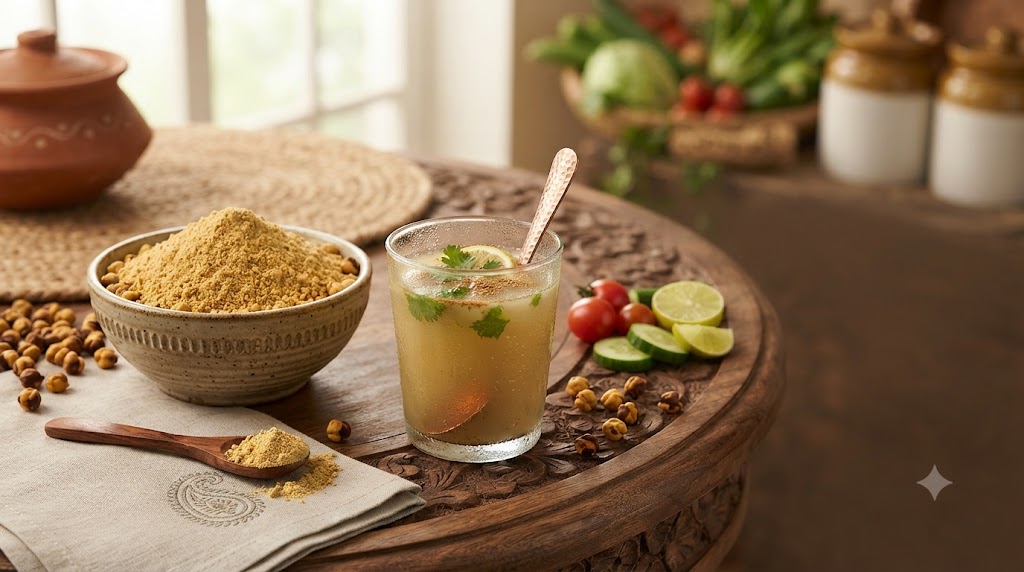
Sattu is a flour produced by roasting grains or pulses and then grinding them into a fine powder. Chana sattu, made from roasted Bengal gram, is one of the most familiar varieties.
The roasting process distinguishes sattu from ordinary gram flour or besan. Besan is generally made from raw chickpeas or split Bengal gram and is normally cooked before consumption. Sattu, on the other hand, is prepared from roasted material and can be mixed directly into drinks and other foods.
A 2026 nutrition-focused article notes that Indian food standards define chana sattu in relation to roasted gram, while roasted Bengal gram flour is specified to contain at least 20% crude protein on a dry basis. Exact nutrition varies according to the ingredients and manufacturing process. (Happy Tummy)
Traditional preparations include savory sattu drinks, sweet sattu sharbat, sattu paratha, litti, fillings, ladoos and other regional foods.
This versatility is one reason sattu continues to be relevant in modern diets.
💪 Why Is Sattu Interesting for Weight Management?
Weight management is ultimately influenced by the relationship between energy intake and energy expenditure, but food quality can affect how easy it is to maintain an appropriate calorie intake.
Foods containing protein and fiber can contribute to satiety—the feeling of fullness after eating.
Sattu made from roasted gram can provide both.
That does not mean eating sattu automatically causes weight loss. Rather, it can become part of a meal pattern that helps a person feel satisfied while obtaining useful nutrients.
For example, replacing a sugary soft drink and biscuits with a savory sattu drink and a nutritious meal changes the overall nutritional profile of the eating occasion.
The benefit comes from the replacement and overall dietary pattern, not from a unique fat-burning property.
🫘 Sattu and Plant Protein
Protein is an important nutrient during weight management.
When people reduce their calorie intake, maintaining adequate protein can help support lean tissue and contribute to satiety. Plant foods such as chickpeas, lentils, beans and roasted gram can make useful contributions to daily protein intake.
Chana sattu is particularly attractive because it provides plant protein in a convenient powdered form.
This makes it easy to incorporate into:
- Breakfasts
- Snacks
- Drinks
- Savory meals
- Stuffed breads
- Vegetable preparations
- Curd-based dishes
However, sattu should not be viewed as a complete replacement for all other protein foods.
A varied diet containing pulses, dairy or dairy alternatives, soy, nuts, seeds, eggs or other appropriate protein sources can provide a broader nutritional profile.
🌿 The Importance of Fiber
Another important characteristic of gram-based sattu is dietary fiber.
Fiber is not digested in the same way as many rapidly available carbohydrates. Depending on the type, it can contribute to stool bulk, digestive function, slower digestion and feelings of fullness.
This is particularly relevant to weight management.
A person who feels satisfied after a meal may be less likely to immediately reach for additional snacks. Of course, appetite is influenced by many factors, including sleep, stress, meal composition, activity and individual biology.
Nevertheless, incorporating fiber-rich foods is a widely accepted part of healthy eating.


🧠 Protein + Fiber: A Useful Combination
The combination of protein and fiber makes sattu particularly interesting.
Imagine two different snacks.
Snack A
A sugary beverage and refined biscuits.
Snack B
A savory sattu drink made with roasted gram flour, water, lemon and spices.
Snack B can provide protein and fiber, whereas Snack A may provide considerably more rapidly digestible carbohydrate with less protein and fiber.
This does not mean every sattu preparation is automatically healthier. A sweet sattu drink containing large amounts of sugar or jaggery can substantially increase its calorie content.
The ingredients surrounding the sattu matter.
🥤 Sattu Drink: A Traditional Weight-Conscious Option
One of the easiest ways to consume sattu is as a drink.
A savory version can be made with:
- Sattu
- Water
- Lemon juice
- Roasted cumin
- Coriander
- Black salt or regular salt
- Optional green chili
Traditional recipes commonly use roasted gram flour mixed with water and seasonings such as lemon, cumin and salt. (Dassana’s Veg Recipes)
The preparation is quick and does not require complicated cooking.
For someone trying to reduce reliance on sugary beverages, a savory sattu drink can be an interesting alternative.
🍋 Lemon Sattu: Simple and Refreshing
Lemon adds acidity and flavor to a sattu drink without contributing a large amount of energy.
A simple preparation might involve mixing two or three tablespoons of sattu with water and then adding lemon juice, roasted cumin and a modest amount of salt.
The result is a traditional beverage with a distinctive roasted flavor.
However, it is important to avoid exaggerated claims that lemon and sattu together “melt belly fat.”
There is no magic combination that selectively burns abdominal fat.
The potential weight-management advantage is more straightforward: a nutritious, satisfying beverage can replace a higher-calorie alternative.
🍯 What About Sweet Sattu?
Sattu can also be prepared as a sweet beverage.
Jaggery, sugar or another sweetener may be added.
This can be delicious, but people managing calorie intake should pay attention to portion size and the amount of added sweetener.
Jaggery is often perceived as healthier than refined sugar, but it still contributes sugar and calories.
Therefore:
Unsweetened or lightly sweetened sattu ≠ unlimited calories.
The best choice depends on the person’s dietary needs and overall meal pattern.
⚖️ Does Sattu Help You Lose Weight?
This is probably the most important question.
The short answer:
Sattu can support a weight-management diet, but it does not independently cause weight loss.
A food cannot overcome consistently excessive calorie intake.
Even nutritious foods contain energy. Eating very large amounts of sattu in addition to an already sufficient diet could increase calorie intake rather than reduce it.
The practical question should therefore be:
“Can I use sattu to create satisfying meals while keeping my overall diet appropriate for my energy needs?”
For many people, the answer can be yes.
🍽️ Portion Size Still Matters
Sattu is nutritious, but portion control remains important.
For example, someone might consume a modest serving of sattu in a drink. Another person might use large quantities of sattu in parathas, ladoos and sweet beverages throughout the day.
Both diets contain sattu, but their total calorie intake could be very different.
This is an important lesson in nutrition:
Healthy food does not mean calorie-free food.
Weight management is easier when nutritious foods are consumed in appropriate quantities.
🌾 Sattu vs. Refined Snacks
Sattu may be particularly useful when it replaces highly processed snack foods.
Many packaged snacks contain combinations of refined carbohydrates, added sugars, salt and fats. They may be easy to overeat because they are convenient and highly palatable.
Sattu provides another option.
A savory sattu drink can be prepared in minutes and can contribute protein and fiber.
Likewise, a vegetable-and-sattu preparation can be considerably more nutrient-dense than a snack based entirely on refined flour.
The goal isn’t to eliminate all packaged foods. Rather, traditional foods such as sattu can increase the variety of nutritious choices available.
🏃 Sattu and Exercise
Sattu can also fit into diets of people who exercise.
Because it provides protein and carbohydrates, it can contribute to a recovery meal or snack.
However, the timing matters for some athletes.
A large fiber-rich drink immediately before intense exercise may feel uncomfortable for certain individuals. A smaller portion or an alternative meal may be preferable before vigorous training.
After exercise, sattu can be combined with another protein source and fruit or other carbohydrates depending on the person’s nutritional requirements.
People involved in intensive strength or endurance training may require substantially more protein than can reasonably be supplied by a small serving of sattu.
🥗 How to Build a Balanced Sattu Meal
Sattu works best when incorporated into a broader balanced meal.
For example:
🥤 Sattu Drink
Sattu + water + lemon + cumin + coriander
🥒 Vegetables
Cucumber, tomato, carrot, spinach or other vegetables
🥛 Additional Protein
Curd, paneer, tofu, eggs, dal or another suitable protein source
🌾 Carbohydrate
Roti, rice, millet or another whole-grain option according to individual needs
This creates a much more complete meal than relying on a single ingredient.
🥣 Sattu With Curd
Plain curd and sattu can be combined into a simple savory preparation.
The curd contributes protein and other nutrients, while sattu adds roasted gram flavor and fiber.
Add:
- Cucumber
- Coriander
- Roasted cumin
- Black pepper
- A small amount of salt
This can work as a light meal or snack depending on the portion and the rest of the day’s diet.
People with lactose intolerance can consider suitable lactose-free or fermented alternatives if appropriate.
🌱 Sattu and Digestive Health
Fiber is important for digestive health, but suddenly consuming a large amount of fiber can cause bloating, gas or abdominal discomfort in some people.
Someone who normally eats very little fiber should increase fiber-rich foods gradually.
Adequate fluid intake can also be helpful.
Sattu should therefore be introduced according to individual tolerance rather than consumed in excessive quantities simply because it is considered healthy.
🩸 Sattu and Blood Sugar
Sattu is sometimes promoted online as a food that can “control diabetes.”
That statement is too broad.
Pulse-based foods contain protein and fiber and can have different effects on post-meal glucose compared with refined carbohydrate foods. But the response depends on the serving size, recipe and the rest of the meal.
For example, a savory sattu drink without added sugar is nutritionally different from a large sweetened sattu beverage.
People with diabetes should consider the total carbohydrate content of their meals and follow individualized dietary guidance from their healthcare professional.
Sattu should not replace prescribed diabetes treatment.
❤️ Sattu and Heart Health
Sattu can also fit into a heart-conscious dietary pattern.
Legumes and pulses are commonly included in dietary patterns emphasizing plant foods, fiber and minimally processed ingredients.
Using sattu in place of certain refined or highly processed snacks can potentially improve overall dietary quality.
But it would be inaccurate to claim that sattu alone prevents heart disease.
Heart health depends on multiple factors, including:
- Overall diet
- Blood pressure
- Blood lipids
- Physical activity
- Smoking
- Body weight
- Sleep
- Genetics
- Existing medical conditions
Sattu is best considered one component of a broader healthy lifestyle.
🧂 Watch the Salt
Savory sattu drinks often contain black salt or other forms of salt.
Salt improves flavor, but excessive sodium intake can be problematic, particularly for people who have been advised to restrict sodium.
Therefore, “healthy sattu drink” does not mean unlimited salt.
Using herbs, lemon, cumin, coriander and spices can increase flavor without requiring excessive salt.
🍬 Watch Added Sugar
The same principle applies to sugar.
A sattu drink containing several teaspoons of sugar can become much more calorie-dense.
For people focused on weight management, an unsweetened or lightly sweetened savory version may be easier to fit into a calorie-conscious eating pattern.
This is one reason traditional savory sattu preparations deserve attention.
🍞 Sattu Paratha: Healthy or Not?
Sattu paratha can be nutritious, but the preparation matters.
Sattu provides protein and fiber, while whole-wheat flour contributes carbohydrates and additional fiber.
However, large amounts of oil or ghee increase the calorie content.
A balanced approach is to:
- Use an appropriate amount of sattu filling.
- Choose whole-wheat dough.
- Limit excess oil or ghee.
- Serve with vegetables.
- Consider plain curd as an accompaniment.
The result can be a satisfying traditional meal.
🔬 What Does Nutrition Research Tell Us?
Research specifically on sattu as a standalone weight-management intervention remains much more limited than research on legumes and chickpeas generally.
That distinction matters.
Scientists have extensively investigated pulses and legumes because they provide protein, fiber, micronutrients and various bioactive compounds. These foods have been studied in relation to satiety, glucose metabolism, cardiovascular health and dietary quality.
But evidence from whole chickpeas cannot automatically be interpreted as proof that every commercial sattu product produces the same effects.
Processing can change the physical structure of food, and recipes vary substantially.
Therefore, the strongest evidence-based statement is that sattu can contribute useful protein and fiber as part of a balanced dietary pattern, rather than that it has a clinically proven independent weight-loss effect.
🧪 Sattu Nutrition Depends on the Product
Not every sattu is identical.
Some products contain primarily roasted gram.
Others may combine gram with barley or other grains.
Some packaged products may contain additional ingredients or flavorings.
Consumers should check the ingredient list and nutrition label when buying packaged sattu.
Look for:
- Primary ingredient
- Protein content
- Fiber content
- Added sugar
- Sodium
- Added oils
- Serving size
The simplest product is often the easiest to incorporate into a healthy meal plan.
💰 An Affordable Source of Nutrition
One of sattu’s biggest advantages may be its affordability.
Protein-rich foods can sometimes be expensive, particularly specialized protein products.
Sattu provides a traditional plant-based option that requires little preparation.
This makes it especially interesting for households looking for practical nutrition without depending heavily on expensive packaged foods.
Healthy eating does not necessarily require expensive ingredients.
🌍 Sattu and Indian Food Culture
Sattu is more than a nutrition trend.
It is deeply connected with regional food culture.
It is particularly associated with Bihar and Jharkhand and is also used across neighboring regions. Traditional recipes include drinks, parathas, litti and other preparations.
Recent discussions of Indian traditional foods also highlight sattu as an example of how regional diets adapted to climate, food availability and practical needs. (The Times of India)
This cultural context is important.
Modern nutrition does not always require abandoning traditional foods. Sometimes the goal is to understand their nutritional strengths and use them appropriately within contemporary dietary patterns.


☀️ Sattu as a Traditional Summer Beverage
Sattu drinks are especially popular during hot weather.
A savory drink containing water, roasted gram flour, lemon and spices can be refreshing and filling.
However, it is important not to overstate the concept of a “cooling food.”
Traditional descriptions of sattu often emphasize its cooling nature, but this should not be interpreted as a medical treatment for heat-related illness.
During extreme heat, adequate water intake and appropriate precautions remain essential.
🥄 Five Practical Ways to Add Sattu to Your Diet
1. Morning Sattu Drink
Mix sattu with water, lemon, cumin and coriander.
Keep added sugar low if weight management is your goal.
2. Sattu-Curd Bowl
Combine sattu with plain curd, cucumber and spices.
3. Vegetable Sattu Chilla
Use sattu with vegetables and spices to prepare a savory pancake.
4. Sattu Paratha
Use a controlled amount of oil or ghee and pair the paratha with vegetables and curd.
5. Sattu Litti
Litti can be part of a balanced meal, particularly when accompanied by plenty of vegetables rather than excessive amounts of ghee.
⚠️ Who Should Be Careful?
Sattu is generally a food rather than a medicinal product, but individual dietary needs differ.
People with specific medical conditions, allergies, digestive disorders, kidney-related dietary restrictions or medically prescribed diets should seek personalized advice before making substantial dietary changes.
People who experience persistent digestive discomfort after consuming gram-based foods should also discuss the issue with a healthcare professional.
And anyone using sattu for diabetes, cholesterol or weight-related medical management should not stop prescribed treatment simply because sattu has become part of their diet.
❌ Common Myths About Sattu
Myth 1: Sattu Burns Belly Fat
There is no special ingredient in sattu that selectively burns abdominal fat.
Myth 2: More Sattu Means Faster Weight Loss
Large quantities can add calories.
Myth 3: Jaggery Makes Sweet Sattu a Weight-Loss Drink
Jaggery still contributes sugar and calories.
Myth 4: Sattu Can Replace Every Protein Food
It can contribute plant protein, but dietary variety remains important.
Myth 5: Sattu Is a Diabetes Treatment
It is a food, not a medical treatment.
Myth 6: Every Sattu Product Is Identical
Ingredients and nutritional composition can vary.
📋 A Simple Weight-Management Sattu Routine
A practical approach could look like this:
Morning: Balanced breakfast with protein and vegetables.
Mid-morning: Savory sattu drink if hungry.
Lunch: Roti or rice + dal/protein + vegetables + curd.
Evening: Fruit, nuts or another nutritious snack.
Dinner: Vegetables + protein + appropriate carbohydrate portion.
The purpose is not to consume sattu at every meal.
Instead, use it strategically where it improves the overall nutritional quality of the diet.
🧘 Sustainable Weight Management Matters More Than “Superfoods”
Long-term weight management rarely depends on one ingredient.
A sustainable lifestyle usually includes:
🏃 Regular physical activity
🥗 Nutrient-dense meals
💧 Adequate hydration
😴 Consistent sleep
🍽️ Appropriate portions
🌾 High-fiber foods
💪 Adequate protein
🧘 Stress management
📅 Long-term consistency
Sattu can support several of these dietary principles, particularly protein and fiber intake, but it is only one piece of the puzzle.
🌟 The Bottom Line
Sattu represents an excellent example of how traditional Indian foods can remain relevant in modern nutrition.
Its roasted gram base provides plant protein and dietary fiber, while its versatility makes it possible to incorporate it into drinks, snacks and complete meals. These characteristics can make sattu particularly useful for people looking for affordable, convenient and filling foods.
For weight management, the biggest opportunity is to use sattu intelligently.
A savory sattu drink can replace a sugary beverage. Sattu can add protein and fiber to a meal. Sattu-based recipes can replace some highly refined snacks. And traditional dishes can be prepared with sensible amounts of oil, sugar and salt.
But sattu is not a miracle weight-loss ingredient.
The most evidence-based way to think about it is simple:
🌾 Sattu can be a nutritious tool for a balanced diet—but sustainable weight management comes from the overall eating pattern and lifestyle.
When combined with vegetables, fruits, whole grains, diverse protein sources, physical activity and appropriate portions, this humble roasted gram flour can earn a valuable place in a modern healthy diet.