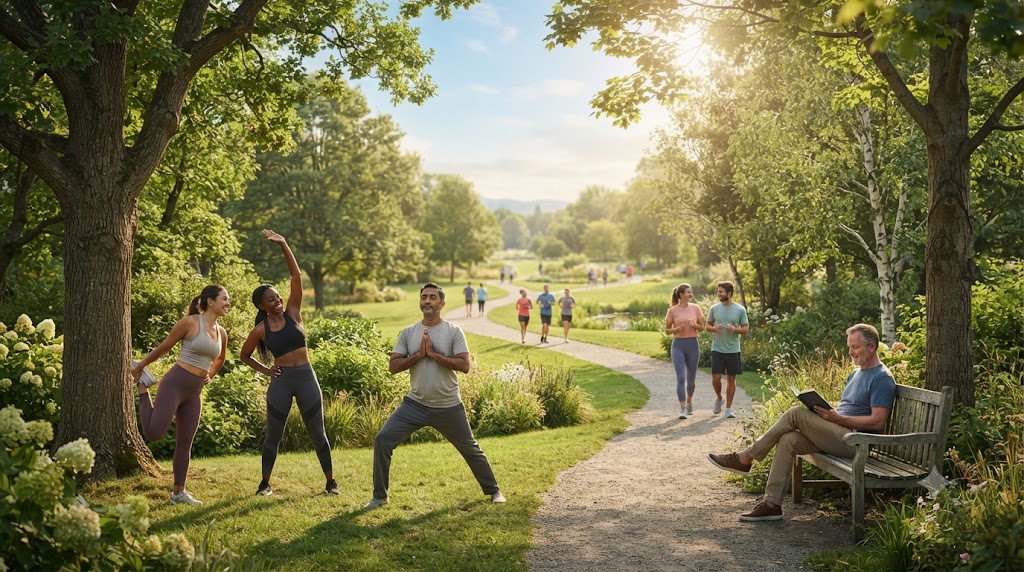
🌿 Introduction: Why Going Outdoors Matters for Your Health
Modern life has made it easier than ever to spend most of the day indoors. We work at computers, communicate through smartphones, watch entertainment on screens, shop online, and often spend our free time sitting at home. While technology provides enormous benefits, constantly staying indoors and inactive can make it easier to overlook one of the simplest wellness resources available to us: time outdoors.
Spending time outside does not necessarily mean taking an expensive vacation, climbing a mountain, or planning an elaborate adventure. It can be as simple as walking around your neighborhood, sitting in a garden, visiting a local park, cycling, gardening, enjoying a morning cup of tea on a balcony, or spending an afternoon with family in an outdoor space.
Nature offers an environment where several healthy behaviors can happen naturally at the same time. A walk outside can provide physical movement. Daylight can support the body’s circadian rhythm. Green spaces can provide a change of scenery. Outdoor activities can encourage social interaction, while quiet time in nature can provide an opportunity to mentally disconnect from daily pressures. 🌳
The relationship between nature and health has attracted considerable scientific interest. Research has associated access to green spaces and time spent in natural environments with various aspects of physical and psychological well-being. However, outdoor time should be viewed as one component of a healthy lifestyle rather than a cure for medical or mental-health conditions.
In this article, we explore the many ways spending time outdoors can contribute to a healthier body, calmer mind, better routines, and greater overall well-being.
☀️ 1. Outdoor Time Encourages Physical Activity
One of the most obvious health benefits of going outdoors is that it creates more opportunities to move.
When people leave the house, they often walk, cycle, hike, garden, play sports, explore, or participate in other activities that involve movement. This can help reduce the amount of time spent sitting.


Regular physical activity is important for cardiovascular health, muscle strength, mobility, balance, and metabolic health. It can also contribute to maintaining a healthy body weight and supporting independence as people age.
You do not need to perform intense exercise every time you go outside. A moderate-paced walk can be an excellent starting point for many people.
For someone who spends most of the working day sitting at a desk, a 15-minute walk during a break can provide valuable movement. Taking another short walk after dinner can further increase daily activity.
The important factor is consistency.
Instead of thinking, “I need to exercise for an hour,” try thinking, “How can I move more today?” A few short outdoor activities can add up.
🚶 2. Walking Outdoors Can Become a Sustainable Exercise Habit
Walking is one of the easiest outdoor activities to incorporate into everyday life.
Unlike many forms of exercise, walking generally requires little equipment. A comfortable pair of shoes and a safe environment may be enough.
Walking through a park or neighborhood can also make exercise feel less like a formal workout. You can listen to music or a podcast, talk with a friend, observe your surroundings, or simply enjoy the environment.
For beginners, starting with a manageable amount of walking may be more realistic than immediately committing to a demanding exercise program.
You could begin with 10 minutes in the morning and 10 minutes in the evening. Gradually increasing duration or pace can help create a routine that fits your lifestyle.
Walking can also be incorporated into everyday transportation. Walking to a nearby store, taking the stairs when practical, or walking part of the journey to work can turn ordinary activities into opportunities for movement.
🧠 3. Nature Can Provide a Mental Break
Our brains are constantly exposed to information.
Emails, notifications, social media, advertisements, conversations, work responsibilities, and news can create a continuous stream of stimulation. Even when we are physically resting, our minds may remain busy.
Going outdoors can create an opportunity to change that environment.
A quiet green space may provide fewer digital distractions and more opportunities to pay attention to natural sights and sounds.


Watching trees move in the wind, listening to birds, observing clouds, or simply walking without checking your phone can encourage a temporary mental reset.
This does not mean that nature eliminates stress or mental-health problems. Rather, outdoor time can be one practical strategy for creating moments of calm within a busy day.
Even a short period outside can provide a change of environment that helps separate work time from personal time.
🌳 4. Spending Time in Green Spaces May Support Stress Management
Stress is a normal part of life, but prolonged stress can affect overall well-being.
Work deadlines, financial responsibilities, family demands, academic pressure, and other challenges can make it difficult to relax. Finding healthy ways to manage everyday stress is therefore important.
Time in natural environments may be useful as part of a broader stress-management routine.
A walk through a tree-lined street can feel different from walking beside heavy traffic. Sitting beside a garden can create a calmer atmosphere than sitting in front of a computer.
For some people, outdoor activities become a form of active relaxation. Gardening, fishing, walking, photography, birdwatching, and hiking can allow attention to move away from everyday worries and toward the present environment.
🌿 The experience can be particularly valuable when combined with slow breathing and reduced screen use.
😊 5. Outdoor Activities Can Support Emotional Well-Being
Physical activity, daylight, social interaction, and exposure to natural environments can overlap when we spend time outside.
For example, consider a simple weekend walk with a friend. You are physically active, communicating with another person, exposed to daylight, and experiencing a change from your normal indoor environment.
These different elements can contribute to an overall sense of well-being.
Outdoor activities can also provide a sense of accomplishment. Completing a hiking trail, caring for a garden, learning to cycle, or regularly walking a certain distance can create positive experiences and encourage continued healthy behavior.
However, it is important not to treat outdoor activity as a replacement for professional mental-health care. People experiencing persistent depression, severe anxiety, suicidal thoughts, or other significant symptoms should seek appropriate professional support.
🌞 6. Daylight Helps Support the Body’s Internal Clock
Natural daylight is closely connected with the body’s circadian rhythm, the biological system that helps regulate sleep and wakefulness.
During the day, exposure to light provides environmental information that helps the body understand when it is daytime. This is one reason morning daylight can be useful for maintaining a consistent sleep-wake routine.


Spending some time outdoors during the day can therefore become part of a healthy daily rhythm.
A morning walk can combine several useful habits: waking up at a consistent time, getting daylight, moving the body, and beginning the day away from screens.
Of course, daylight exposure should be balanced with sun safety. Excessive ultraviolet exposure can damage skin and increase the risk of skin cancer.
🦴 7. Outdoor Time and Vitamin D
Sunlight enables the body to produce vitamin D. Vitamin D plays an important role in calcium absorption and bone health and is involved in several other biological processes.
Outdoor exposure can therefore contribute to vitamin D production, although the amount produced varies considerably depending on factors such as skin type, season, latitude, time of day, clothing, and sunscreen use.
More sun exposure is not automatically healthier.
Long periods of unprotected ultraviolet exposure can damage the skin. Sun protection remains important, particularly during periods of strong sunlight.
People who are concerned about vitamin D deficiency should discuss appropriate testing and supplementation with a healthcare professional rather than deliberately seeking excessive sun exposure.
😴 8. Outdoor Activities May Support Better Sleep Routines
Sleep is fundamental to physical and mental health.
Spending time outdoors during the day can support a healthy lifestyle by combining daylight exposure with physical activity. Both can be useful components of a consistent sleep routine.
For example, someone might start the day with a morning walk and finish the workday with a short evening stroll. Establishing predictable routines can help create a clear distinction between daytime activity and nighttime rest.


Outdoor activity should not be considered a treatment for chronic sleep disorders, but it can complement good sleep habits.
A healthy sleep routine can also include maintaining consistent bed and wake times, limiting stimulating activities close to bedtime, creating a comfortable bedroom environment, and addressing persistent sleep problems with a healthcare professional.
👀 9. Going Outside Can Help Create Screen-Free Time
Screens are an important part of modern life, but excessive recreational screen use can contribute to sedentary behavior and interfere with healthy routines.
Going outside creates a natural opportunity to put devices away.
Imagine replacing 30 minutes of scrolling with a walk around a local park. Instead of watching another video during a break, you might sit outside and observe your surroundings.
These small changes do not require completely eliminating technology.
The goal is balance.
📱➡️🌳 A short period without notifications can give you an opportunity to focus on movement, conversation, nature, or simply your own thoughts.
Families can also create screen-free outdoor traditions, such as weekend walks, outdoor games, gardening, or visiting local parks.
👨👩👧👦 10. Outdoor Time Can Strengthen Social Connections
Health is not only about food and exercise. Social relationships also contribute to overall well-being.
Outdoor activities provide natural opportunities to connect with other people.
Friends can go for walks together. Families can have picnics. Couples can explore a new trail. Parents can play outdoor games with children. Communities can organize gardening projects or recreational activities.


These experiences can turn physical activity into a social experience.
For people who find traditional exercise boring, having a walking partner can make the activity more enjoyable and provide accountability.
Social outdoor activities can also create opportunities to build stronger relationships while encouraging healthier routines.
🌱 11. Gardening Can Combine Movement and Nature
Gardening is another accessible outdoor activity.
Digging, planting, watering, weeding, carrying gardening materials, and maintaining plants involve different types of physical movement.
Gardening also provides an opportunity to interact with nature and spend time away from screens.
For some people, growing vegetables, herbs, flowers, or trees can provide a sense of purpose and accomplishment. Watching something grow from a seed into a mature plant can be rewarding.


Gardening can be adapted to different physical abilities. Raised garden beds, containers, and small balcony gardens can make gardening possible even when someone does not have a large yard.
🥾 12. Hiking Can Combine Exercise and Exploration
For people who enjoy adventure, hiking offers a combination of physical activity and exposure to natural environments.
Depending on the trail, hiking can challenge the cardiovascular system, legs, balance, and coordination.
It also provides an opportunity to explore forests, hills, coastal areas, or other natural landscapes.
However, hiking should be approached according to your fitness level and environmental conditions.
Beginners can start with short, easy trails. Carry sufficient water, wear appropriate footwear, check weather conditions, and tell someone where you are going when hiking in remote areas.
Safety should always come before distance or speed.
🚴 13. Cycling Provides an Outdoor Cardio Option
Cycling can be another enjoyable way to spend time outdoors.
It can provide cardiovascular exercise while allowing you to travel farther than you might on foot. Cycling can be recreational or part of everyday transportation.
A short bicycle ride through a safe area can provide physical activity while also giving you an opportunity to explore your surroundings.
Safety equipment and appropriate road awareness are essential. Cyclists should follow local traffic laws and use appropriate visibility and protective equipment.
🧘 14. Outdoor Mindfulness Can Help You Slow Down
Mindfulness involves paying attention to the present moment rather than constantly focusing on past events or future worries.
Nature can provide a convenient setting for practicing this skill.
You can sit quietly beneath a tree and focus on your breathing. You can walk slowly and notice the sensation of your feet touching the ground. You can listen carefully to birds, wind, or other sounds.
🌿 The goal is not to force your mind to become completely empty. Instead, it is about noticing what is happening in the present moment.
Even five minutes of quiet observation can turn an ordinary outdoor break into a more intentional experience.
🏙️ 15. You Don’t Need to Live Near a Forest
A common misconception is that outdoor wellness requires access to spectacular natural landscapes.
It doesn’t.
Urban environments often contain parks, walking paths, community gardens, tree-lined streets, public gardens, playgrounds, lakesides, and other outdoor spaces.


Even a small amount of greenery can provide a change from an indoor environment.
If you live in a densely populated area, look for nearby public spaces that are safe and accessible. A short walk around a tree-lined neighborhood may be a practical alternative to traveling long distances.
🌦️ 16. Adapting Outdoor Activities to the Weather
Weather can affect outdoor plans, but it does not necessarily have to stop them.
During hot weather, choose cooler times of the day, seek shade, drink enough fluids, and protect yourself from excessive heat and sunlight.
During colder weather, appropriate clothing can make outdoor activity more comfortable.
Rainy conditions may require additional planning, while severe storms, extreme heat, poor air quality, or other hazardous conditions may make staying indoors the safer choice.
Healthy outdoor habits should always include awareness of the environment.
💧 17. Hydration Is Important During Outdoor Activities
Outdoor activity can increase fluid loss, particularly in hot or humid conditions.
Dehydration may contribute to symptoms such as thirst, fatigue, dizziness, headache, and reduced physical performance.
Carrying water can therefore be a simple but important part of outdoor activities.
The amount of fluid you need depends on factors such as temperature, activity intensity, duration, body size, and individual circumstances.
For longer or more demanding activities, planning ahead becomes particularly important.
🧴 18. Practice Smart Sun Protection
Enjoying nature does not mean ignoring sun safety.
Ultraviolet radiation can damage skin even when temperatures do not feel extremely hot.
Depending on the situation, sun-protection strategies can include seeking shade, wearing protective clothing, using sunscreen appropriately, and avoiding prolonged exposure during periods when ultraviolet radiation is strongest.
Children also require appropriate sun protection.
The goal is to enjoy the benefits of outdoor activity while reducing avoidable risks.
🧑💻 19. Outdoor Breaks Can Be Valuable During the Workday
People who work at desks may benefit from intentionally scheduling short outdoor breaks.
Instead of remaining at the computer throughout the entire workday, consider stepping outside for a brief walk when circumstances allow.
A short break can provide movement and a change of environment.
For remote workers, an outdoor break can also create a psychological boundary between work and personal time.
For example, a 10-minute walk after finishing work can become a simple transition ritual: leave the workspace, move your body, and gradually shift attention toward the evening.
🧒 20. Children Can Benefit From Outdoor Play
Outdoor time is particularly important for children because play naturally encourages movement and exploration.
Running, climbing, cycling, playing ball, and exploring safe environments can support physical development while allowing children to practice coordination and social skills.


Outdoor play can also provide a break from passive screen-based entertainment.
Parents and caregivers can encourage outdoor time by making it enjoyable rather than presenting it as a chore.
Simple activities such as visiting a playground, walking together, gardening, or playing games can make being outdoors a normal part of family life.
👵 21. Outdoor Activities Can Support Healthy Aging
Older adults can also benefit from regular outdoor movement.
Walking, gardening, gentle cycling, outdoor stretching, and other suitable activities can help maintain mobility and independence.
Outdoor activities can also provide opportunities for social interaction, which may be particularly valuable for people who spend significant amounts of time alone.
Safety and individual ability should guide activity choices. People with balance problems, mobility limitations, cardiovascular conditions, or other health concerns should discuss appropriate exercise with a healthcare professional.
🌿 22. Outdoor Time Can Encourage Healthier Lifestyle Choices
One healthy habit can sometimes lead to another.
A person who starts taking morning walks may become more aware of their energy levels. They may begin paying greater attention to sleep, hydration, food choices, and physical activity.
This is one reason outdoor time can become part of a broader healthy-lifestyle strategy.
Instead of viewing wellness as a collection of complicated rules, consider building small routines that reinforce each other.
For example:
🌅 Morning daylight
🚶 A short walk
💧 Drinking water
🥗 A nutritious breakfast
💻 Focused work
🌳 An outdoor afternoon break
😴 A consistent nighttime routine
No single habit needs to be perfect.
Consistency matters more than perfection.
📅 How to Build an Outdoor Wellness Routine
Creating an outdoor habit becomes easier when it is specific and realistic.
Start by choosing a time that naturally fits your schedule.
A morning routine could involve a 15-minute walk before work. A lunchtime routine might involve eating outside or walking around the building. An evening routine could include a family walk after dinner.
You can also create a weekly outdoor goal.
For example, you might decide to:
Monday: 15-minute morning walk 🚶
Tuesday: Outdoor stretching 🧘
Wednesday: Evening neighborhood walk 🌳
Thursday: Short cycling session 🚴
Friday: Park break 🌿
Saturday: Longer outdoor activity 🥾
Sunday: Family nature outing 👨👩👧👦
The exact activities are less important than finding something enjoyable and sustainable.
🌎 Making Nature Part of Everyday Life
You don’t need to completely change your lifestyle to spend more time outdoors.
Small environmental changes can help.
Keep comfortable walking shoes available. Choose destinations that are walkable when practical. Identify nearby parks. Keep gardening supplies accessible. Schedule outdoor activities with friends. Use outdoor breaks as reminders to step away from your screen.
You can also make nature more engaging by combining it with hobbies.
Photography 📸, birdwatching 🐦, drawing 🎨, reading 📖, gardening 🌱, cycling 🚴, and walking 🚶 can all become reasons to spend more time outside.
When outdoor time is connected to something you already enjoy, maintaining the habit may become easier.
⚠️ When Outdoor Activity Requires Extra Caution
Outdoor activity is generally beneficial for many people, but the environment matters.
Extreme heat, severe cold, thunderstorms, dangerous terrain, high pollution levels, poor visibility, unsafe roads, and other hazards can create risks.
People with specific health conditions may also need individualized exercise recommendations.
Pay attention to warning signs such as severe dizziness, chest pain, unusual shortness of breath, confusion, fainting, or extreme weakness. Stop the activity and seek appropriate medical assistance when necessary.
Healthy activity should make your life better, not put you in unnecessary danger.
🌟 A Simple 20-Minute Outdoor Wellness Plan
If you are unsure where to begin, try a simple 20-minute routine.
First 5 minutes: Walk slowly and allow your body to warm up.
Next 10 minutes: Walk at a comfortable, moderate pace while paying attention to your surroundings.
Final 5 minutes: Slow down. Take several comfortable breaths and notice what you can see and hear around you.
Try leaving your phone in your pocket unless you need it for safety.
You don’t need to track every step or calorie.
The purpose is simply to move, experience daylight and nature, and create a short period away from your usual indoor environment.
💚 Creating a Healthier Relationship With the Outdoors
The most useful outdoor routine is one you actually enjoy.
Some people love hiking. Others prefer gardening. Some enjoy cycling, while others simply want to sit quietly in a park.
There is no single correct way to spend time outside.
Your routine can change with your age, fitness level, schedule, location, weather, and interests.
What matters is creating regular opportunities for movement, daylight, relaxation, and connection.
Outdoor time should complement other healthy behaviors such as nutritious eating, adequate sleep, regular physical activity, stress management, preventive healthcare, and meaningful social relationships.
🌿 Conclusion: Step Outside and Give Your Health a Natural Boost
Spending time outdoors is a simple habit with the potential to support many dimensions of well-being. Walking and other outdoor activities can encourage physical movement, while natural environments can provide opportunities for relaxation and mental recovery. Daylight can help support healthy circadian rhythms, and outdoor activities can create opportunities for social connection and screen-free time.
The best part is that outdoor wellness does not have to be complicated or expensive.
You can start with a 10-minute walk, spend a few minutes tending to plants, sit outside during a break, or visit a nearby park with someone you care about. 🌳
Small actions can become meaningful habits when repeated consistently.
So the next time you have a free moment, consider putting down your phone, stepping away from the screen, and going outside. Take a breath, move your body, notice your surroundings, and give yourself a few moments to reconnect with the natural world. ☀️🌿
A healthier lifestyle can sometimes begin with something as simple as opening the door and taking the first step outside.