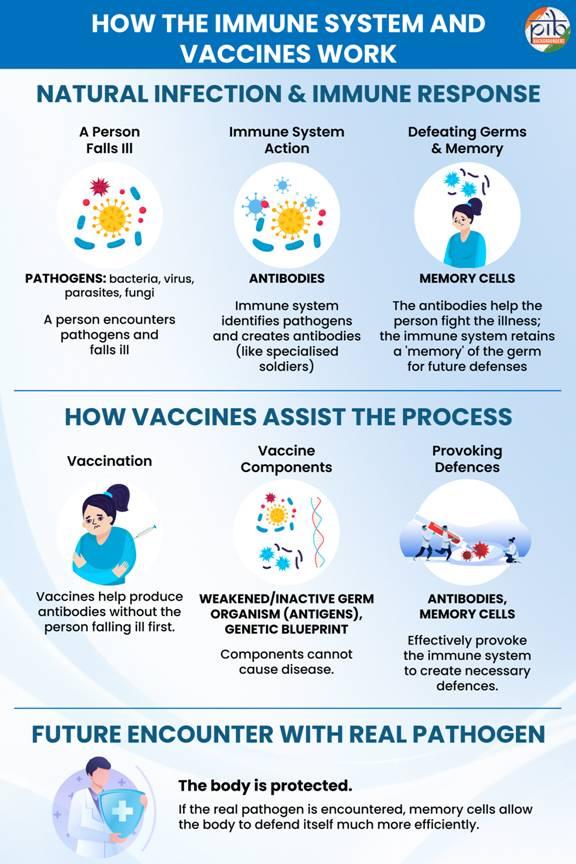
Diseases, vaccines, and immunity are closely connected concepts in human health. Diseases occur when the body’s normal functions are disrupted by pathogens, genetic factors, lifestyle choices, or environmental conditions. Vaccines help prevent many infectious diseases by preparing the immune system to recognize and fight harmful microorganisms. Immunity is the body’s defense mechanism that protects against infections and diseases.
Understanding these topics is essential for maintaining good health and preventing the spread of illnesses.
What Are Diseases?
A disease is any condition that impairs the normal functioning of the body or mind. Diseases can affect different organs, tissues, and systems, leading to various symptoms and health complications.
Types of Diseases
1. Infectious Diseases
These diseases are caused by microorganisms such as bacteria, viruses, fungi, and parasites.
Examples:
- COVID-19
- Tuberculosis
- Malaria
- Influenza
2. Non-Infectious Diseases
These diseases are not caused by pathogens and cannot spread from person to person.
Examples:
- Type 2 Diabetes
- Cancer
- Heart disease
- Asthma
3. Genetic Diseases
These are inherited through genes from parents.
Examples:
- Sickle Cell Disease
- Cystic fibrosis
What Is Immunity?
Immunity is the body’s ability to resist and fight infections and diseases. The immune system consists of organs, tissues, cells, and proteins that work together to protect the body.
Components of the Immune System


Key components include:
- White blood cells (WBCs)
- Antibodies
- Lymph nodes
- Bone marrow
- Spleen
- Thymus
Types of Immunity
1. Innate Immunity
- Present from birth
- First line of defense
- Includes skin, mucus, and immune cells
2. Adaptive Immunity
- Develops after exposure to pathogens
- Produces specific antibodies
- Creates immune memory
3. Passive Immunity
- Obtained from another source
- Example: antibodies passed from mother to baby
4. Active Immunity
- Developed after infection or vaccination
- Usually long-lasting
How the Immune System Fights Disease
When a pathogen enters the body:
- The immune system detects the foreign invader.
- White blood cells attack the pathogen.
- Antibodies are produced to target the infection.
- Memory cells remain in the body.
- Future infections are recognized and defeated more quickly.
This memory response is the scientific basis for vaccination.
What Are Vaccines?
Vaccines are biological preparations that help the immune system recognize and fight specific diseases without causing the actual illness.
Vaccines train the immune system to identify harmful pathogens and respond rapidly when exposed in the future.
How Vaccines Work


- A harmless form or part of a pathogen is introduced.
- The immune system identifies it as foreign.
- Antibodies and memory cells are produced.
- The body becomes prepared for future exposure.
Types of Vaccines
1. Live Attenuated Vaccines
Contain weakened forms of pathogens.
Examples:
- Measles vaccine
- Mumps vaccine
- Rubella vaccine
2. Inactivated Vaccines
Contain killed pathogens.
Examples:
- Polio vaccine
- Rabies vaccine
3. Subunit Vaccines
Contain only specific parts of a pathogen.
Examples:
- Hepatitis B vaccine
4. Toxoid Vaccines
Contain inactivated toxins.
Examples:
- Tetanus vaccine
- Diphtheria vaccine
5. mRNA Vaccines
Use genetic instructions to produce a harmless protein that triggers immunity.
Examples:
- Some COVID-19 vaccines
Benefits of Vaccination
Individual Protection
Vaccines significantly reduce the risk of infection and severe disease.
Community Protection
When many people are vaccinated, herd immunity helps protect vulnerable individuals who cannot receive vaccines.
Reduced Healthcare Burden
Vaccination programs decrease hospitalizations, complications, and healthcare costs.
Disease Eradication
One of the greatest achievements of vaccination was the elimination of Smallpox worldwide.
Common Vaccine-Preventable Diseases
| Disease | Cause | Vaccine Available |
|---|---|---|
| Measles | Virus | Yes |
| Polio | Virus | Yes |
| Hepatitis B | Virus | Yes |
| Tetanus | Bacteria | Yes |
| Diphtheria | Bacteria | Yes |
| Influenza | Virus | Yes |
| COVID-19 | Virus | Yes |
Herd Immunity
Herd immunity occurs when a large portion of a population becomes immune to a disease, making it difficult for the pathogen to spread.
Benefits include:
- Protection for infants
- Protection for people with weakened immune systems
- Reduced outbreaks
- Lower disease transmission rates
Factors That Influence Immunity
Strong immunity depends on several factors:
Nutrition
A balanced diet rich in:
- Vitamins A, C, D, and E
- Zinc
- Protein
- Fruits and vegetables
Sleep
Adults generally need 7–9 hours of quality sleep daily.
Physical Activity
Regular exercise supports healthy immune function.
Stress Management
Chronic stress can weaken immune responses.
Hygiene
Proper handwashing and sanitation reduce exposure to pathogens.
Challenges in Disease Prevention
Modern healthcare still faces challenges such as:
- Emerging infectious diseases
- Antimicrobial resistance
- Vaccine misinformation
- Global travel spreading infections rapidly
- Unequal access to healthcare and vaccines
Addressing these challenges requires scientific research, public health programs, and community participation.
Conclusion
Diseases have affected humanity throughout history, but advances in immunology and vaccination have dramatically improved public health. Immunity serves as the body’s natural defense system, while vaccines strengthen that defense by safely teaching the immune system how to recognize and combat dangerous pathogens. Together, disease prevention strategies, strong immunity, and widespread vaccination help reduce illness, save lives, and create healthier communities worldwide.