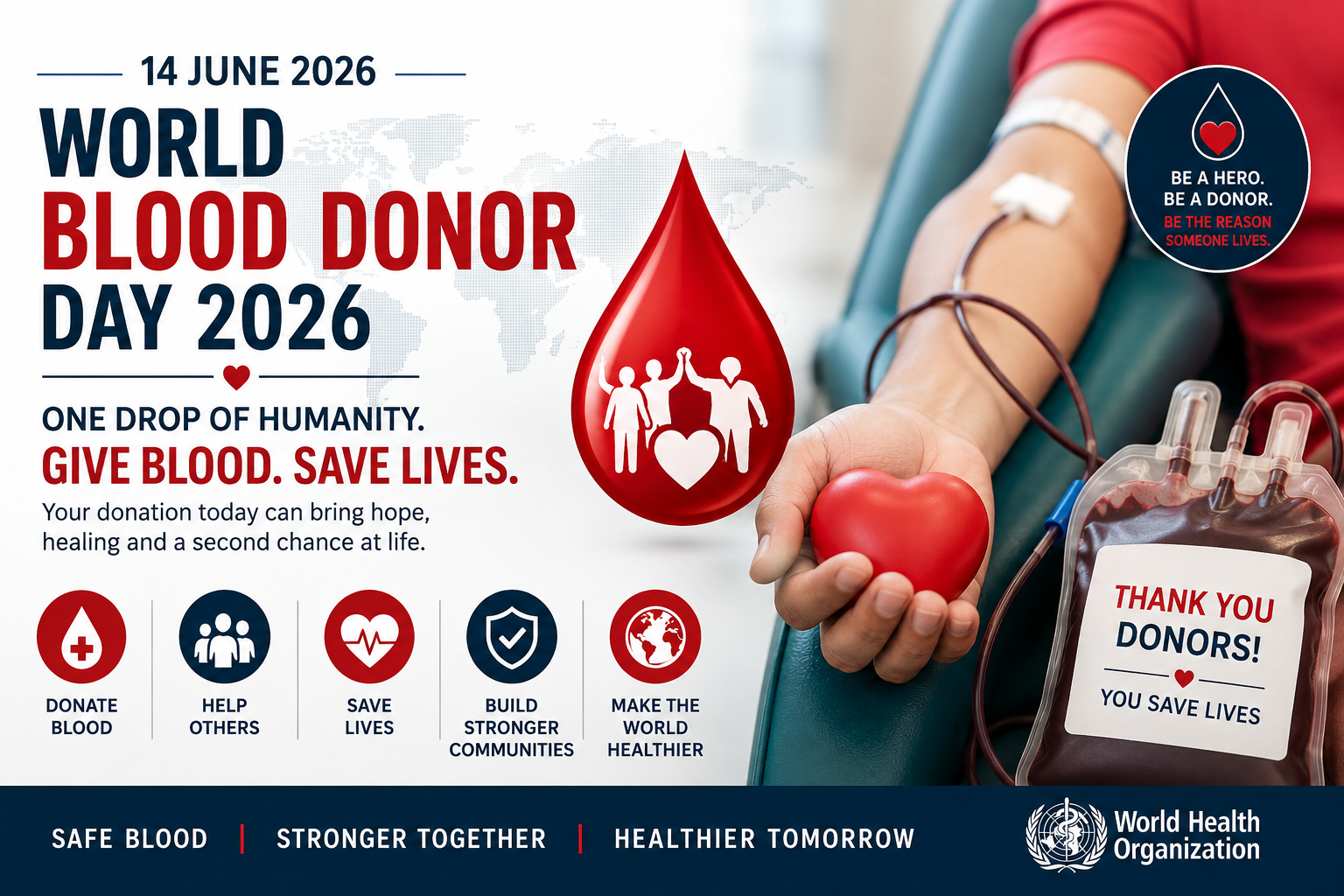
World Blood Donor Day 2026 highlights the importance of voluntary blood donation, public health awareness, disease prevention, and community health initiatives worldwide.


Introduction
Every year, millions of people around the world depend on blood transfusions to survive medical emergencies, surgeries, childbirth complications, cancer treatments, and chronic illnesses. On 14 June 2026, the global community once again comes together to observe World Blood Donor Day, an annual campaign led by the World Health Organization to raise awareness about the importance of voluntary blood donation and to thank blood donors for their life-saving contributions.
This year’s theme, “One Drop of Humanity. Give Blood. Save Lives.”, highlights the profound impact that a single act of generosity can have on individuals, families, and entire communities. The campaign serves as a reminder that blood cannot be manufactured artificially and that safe blood supplies depend entirely on willing donors.
Beyond blood donation, public health organizations worldwide continue to strengthen efforts related to vaccination programs, disease prevention, health education, and community wellness initiatives. These campaigns play a critical role in protecting populations from preventable illnesses and improving overall health outcomes.
Understanding World Blood Donor Day


World Blood Donor Day is observed annually on June 14, the birthday of Karl Landsteiner, whose discovery of blood groups revolutionized modern medicine and made safe blood transfusions possible.
The primary goals of the campaign include:
- Encouraging regular voluntary blood donation.
- Raising awareness about the need for safe blood supplies.
- Recognizing the contribution of blood donors.
- Strengthening national blood collection systems.
- Promoting equitable access to blood and blood products.
Healthcare experts emphasize that a reliable blood supply is an essential component of strong healthcare systems. Blood transfusions are required every day in hospitals across the globe, yet shortages continue to affect many regions.
Why Blood Donation Matters
Blood donation remains one of the simplest and most impactful ways individuals can contribute to public health.
A single blood donation may help multiple patients because donated blood can often be separated into components such as:
- Red blood cells
- Platelets
- Plasma
- Cryoprecipitate
These components can be used to treat different medical conditions.
Supporting Emergency Care
Victims of traffic accidents, natural disasters, and traumatic injuries often require immediate blood transfusions. Access to adequate blood supplies can mean the difference between life and death during emergencies.
Assisting Surgical Procedures
Many surgeries, including organ transplants and complex cardiac operations, rely on blood availability to ensure patient safety.
Helping Cancer Patients
Patients undergoing chemotherapy frequently need blood products to manage treatment-related complications and maintain healthy blood counts.
Protecting Mothers and Newborns
Postpartum hemorrhage remains a major cause of maternal mortality in many countries. Safe blood transfusions can save the lives of mothers experiencing severe bleeding during childbirth.
The Global Need for Blood Donations
Despite advances in healthcare, many countries continue to face shortages of donated blood.
Several challenges contribute to these shortages:
- Aging populations
- Seasonal declines in donor participation
- Public misconceptions about donation
- Limited healthcare infrastructure
- Emergency situations and disease outbreaks
Health authorities encourage eligible adults to become regular donors rather than donating only during emergencies.
Regular donations help blood banks maintain stable inventories and prepare for unexpected increases in demand.
Who Can Donate Blood?


Eligibility criteria vary by country, but generally donors should:
- Be in good health.
- Meet minimum age requirements.
- Meet weight requirements.
- Pass a basic health screening.
- Have acceptable hemoglobin levels.
Potential donors are typically evaluated through questionnaires and health assessments before donation.
Individuals with concerns about eligibility should consult local blood donation centers for guidance.
The Blood Donation Process
Many people avoid donating because they are unfamiliar with the process. In reality, blood donation is usually straightforward and safe.
Registration
Donors provide identification and complete a health questionnaire.
Health Screening
Healthcare personnel assess:
- Blood pressure
- Temperature
- Pulse rate
- Hemoglobin levels
Blood Collection
The donation process generally takes about 8–10 minutes, although the entire visit may last around one hour.
Recovery
Donors are encouraged to:
- Drink fluids
- Eat light refreshments
- Avoid strenuous activities temporarily
Most donors return to normal activities shortly afterward.
Safety Measures in Blood Donation
Patient and donor safety remain top priorities.
Modern blood collection systems incorporate rigorous safeguards, including:
- Sterile, single-use equipment
- Laboratory testing of donated blood
- Trained healthcare personnel
- Quality-control procedures
- Continuous monitoring and regulation
These measures help reduce the risk of transfusion-transmitted infections and ensure the safety of blood supplies.
Public Health Campaigns Beyond Blood Donation
World Blood Donor Day is only one part of broader public health efforts taking place globally.
Governments, international organizations, and community groups continue investing in programs designed to improve population health.
Vaccination Campaigns
Vaccination remains one of the most effective public health interventions ever developed.
Routine immunization programs help protect communities from diseases such as:
- Measles
- Polio
- Hepatitis
- Influenza
- Human papillomavirus (HPV)
Mass vaccination initiatives continue to prevent outbreaks and save millions of lives annually.
Disease Prevention Programs
Public health agencies regularly conduct campaigns focused on:
- Hand hygiene
- Tobacco cessation
- Healthy nutrition
- Physical activity
- Vector-borne disease prevention
These efforts aim to reduce healthcare burdens and improve quality of life.
Community Health Education


Health education remains a cornerstone of disease prevention.
Effective public awareness campaigns help individuals understand:
- Risk factors for chronic diseases
- Early warning signs of illness
- Preventive healthcare measures
- Mental health awareness
- Healthy lifestyle choices
When communities are informed, they are better equipped to make decisions that support long-term health.
The Role of Volunteers in Public Health
Volunteers contribute significantly to healthcare systems worldwide.
Their efforts include:
- Blood donation
- Community outreach
- Vaccination support
- Health education
- Emergency response activities
Public health experts often emphasize that community engagement is essential for successful health campaigns.
Volunteers help bridge gaps between healthcare providers and the populations they serve.
Technology and Modern Public Health
Technological innovation continues transforming public health initiatives.
Digital tools now support:
- Disease surveillance
- Telemedicine
- Vaccination tracking
- Health data analysis
- Public awareness campaigns
Mobile applications and online platforms allow health authorities to communicate rapidly with the public and respond more effectively to emerging health challenges.
Artificial intelligence and advanced analytics are also helping researchers identify disease patterns and improve healthcare planning.
Addressing Health Equity
One of the most important objectives of modern public health is ensuring equitable access to healthcare services.
Challenges remain in many regions, including:
- Geographic barriers
- Limited healthcare infrastructure
- Economic disparities
- Workforce shortages
- Limited access to essential medicines
Organizations around the world are working to reduce these inequalities through targeted investments and community-based initiatives.
Blood donation campaigns also support health equity by ensuring all patients have access to lifesaving blood products regardless of socioeconomic status.
Inspiring a Culture of Giving
World Blood Donor Day is about more than collecting blood. It is about fostering a culture of compassion, solidarity, and shared responsibility.
When individuals donate blood, they often never meet the people whose lives they help save. Yet their contribution may support accident victims, cancer patients, mothers during childbirth, and countless others facing medical emergencies.
Regular donors demonstrate how small actions can create extraordinary impacts.
Their generosity strengthens healthcare systems and helps communities become more resilient.
The Future of Public Health Campaigns
As healthcare challenges evolve, public health campaigns must continue adapting to changing needs.
Future priorities may include:
- Strengthening healthcare resilience
- Expanding preventive care programs
- Improving emergency preparedness
- Enhancing disease surveillance
- Increasing community engagement
- Promoting environmental health awareness
Collaboration among governments, healthcare professionals, researchers, and citizens will remain essential to achieving these goals.
Public health success depends not only on medical advances but also on active participation from communities worldwide.
Conclusion
World Blood Donor Day 2026 serves as a powerful reminder of the life-saving importance of voluntary blood donation. Under the theme “One Drop of Humanity. Give Blood. Save Lives.”, the campaign celebrates donors whose generosity helps sustain healthcare systems and save millions of lives each year.
At the same time, ongoing public health initiatives—including vaccination programs, disease prevention campaigns, health education efforts, and community outreach activities—continue strengthening global health and improving well-being across populations.
Every individual has the potential to contribute to public health, whether through blood donation, supporting vaccination efforts, adopting healthy lifestyle practices, or participating in community initiatives. Together, these collective actions help create healthier, safer, and more resilient societies for future generations.