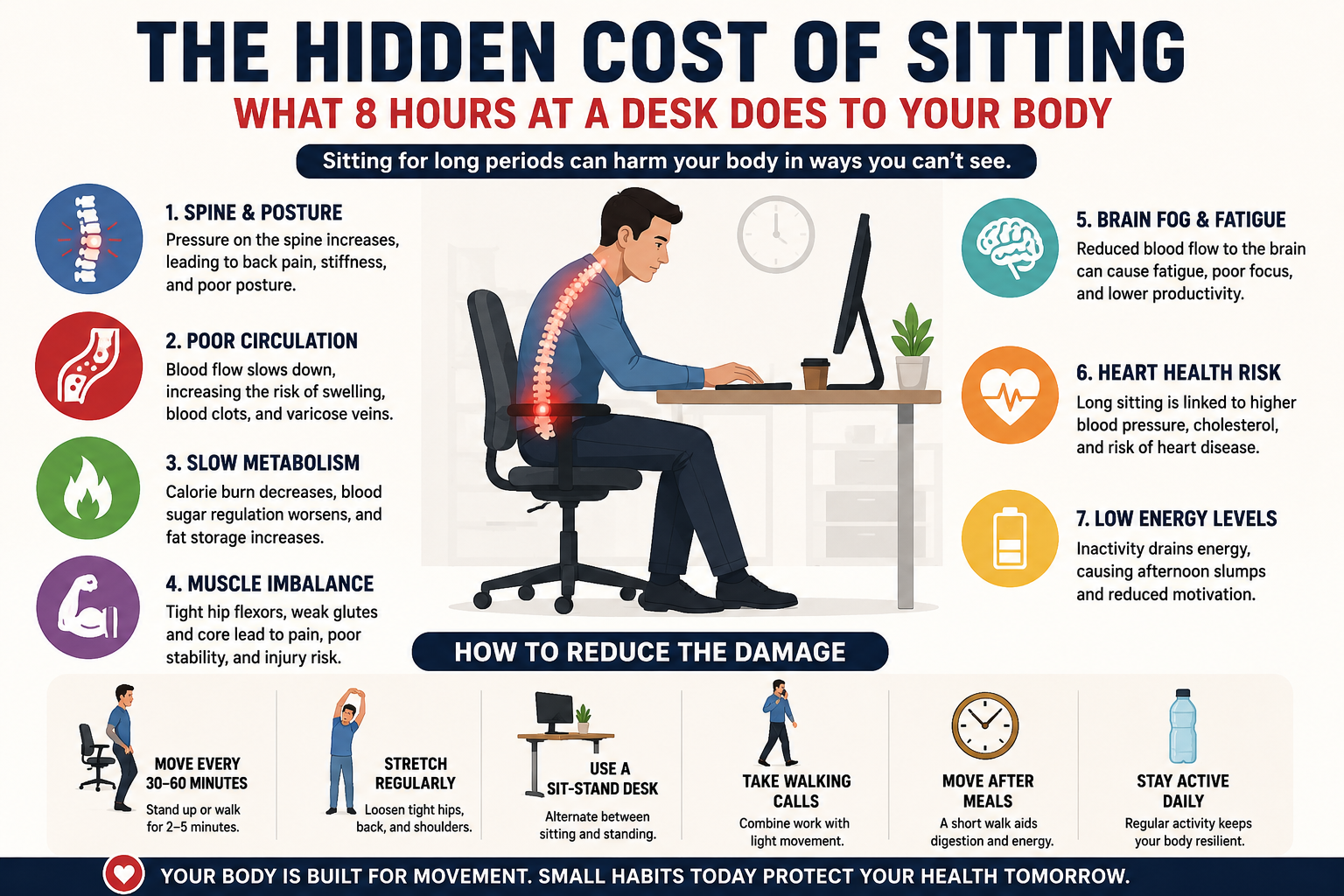
Sitting for 8 hours a day can slow circulation, weaken muscles, reduce metabolism, and strain posture and heart health. Even regular exercise cannot fully offset long periods of uninterrupted sitting. The best protection is frequent movement breaks, posture variation, and light activity throughout the day.


Spending eight hours a day at a desk has become the modern default for millions of people. But what feels “normal” for your work routine can quietly reshape your body, metabolism, and even your long-term health.
Research shows that prolonged sitting is strongly linked with increased risk of cardiovascular disease, type 2 diabetes, poor posture, and musculoskeletal problems—even in people who exercise regularly (Mayo Clinic Press). The issue isn’t just lack of exercise, but the continuous time spent in one static position.
So what exactly happens inside your body during a full workday of sitting?
1. Your Spine Starts to Compress and Adapt


Your spine is designed for movement, not long static loading. When you sit for hours, especially in a slouched posture, pressure builds in your lower back discs. Over time, this can contribute to stiffness, discomfort, and chronic lower back pain.
A typical desk posture also encourages:
- Forward head position (extra strain on neck muscles)
- Rounded shoulders
- Tight hip flexors
Studies on sedentary work show that long sitting periods are strongly associated with musculoskeletal pain, particularly in the lower back and neck regions (Mayo Clinic Press).
The body gradually “adapts” to the position you hold most often—meaning poor posture becomes your default alignment.
2. Blood Circulation Slows Down


When you sit still for long periods, your leg muscles become inactive. These muscles normally act like a pump to help push blood back toward the heart.
Without movement:
- Blood flow slows
- Fluid can pool in the lower legs
- Risk of swelling and discomfort increases
In extreme cases, prolonged immobility can contribute to blood clot risk, similar to what happens during long flights. Medical research highlights that uninterrupted sitting can impair vascular function and reduce circulation efficiency (PubMed).
Even small interruptions—standing or walking briefly—help restore blood flow and reduce these effects.
3. Your Metabolism Begins to Slow


One of the most important hidden effects of long sitting is metabolic slowdown.
When muscles remain inactive for hours:
- Glucose uptake decreases
- Fat burning slows down
- Insulin sensitivity can decline
This is why even people who exercise daily can still experience metabolic issues if they sit for most of the day. Studies show that prolonged sedentary time is associated with higher risk of type 2 diabetes and cardiovascular disease, independent of exercise habits (MDPI).
In simple terms: one workout cannot fully “cancel out” eight hours of inactivity.
4. Your Muscles Become Weak and Tight at the Same Time


Sitting creates a strange imbalance in your muscles:
- Some muscles become tight (hip flexors, chest, neck)
- Others become weak (glutes, core, upper back)
This imbalance can lead to:
- Reduced stability in your hips and spine
- Increased risk of injury during movement
- Poor posture reinforcement
Over time, your body becomes more dependent on the chair for support, reducing natural muscular engagement even when you’re not sitting.
5. Your Brain Feels the Impact Too


Sitting too long doesn’t just affect the body—it also affects mental performance.
Reduced movement means:
- Lower blood flow to the brain
- Decreased oxygen delivery
- Reduced alertness and focus
This can lead to what many people call “brain fog,” especially during long afternoon work sessions. Movement increases circulation and helps restore cognitive sharpness.
Even short breaks can noticeably improve attention and productivity.
6. Long Sitting Affects Heart Health


One of the most serious long-term concerns linked with prolonged sitting is cardiovascular health.
Extended sedentary time is associated with:
- Higher blood pressure
- Increased cholesterol levels
- Reduced vascular flexibility
- Greater risk of heart disease
Research shows that sitting for more than 6–8 hours daily is linked with significantly higher cardiovascular risk factors (Mayo Clinic Press).
Even if you are otherwise healthy, long uninterrupted sitting can gradually strain your heart and blood vessels over time.
7. Energy Levels Drop Throughout the Day


Have you noticed how sitting all day makes you feel more tired—not less?
That’s because inactivity reduces:
- Muscle engagement
- Circulation efficiency
- Metabolic activity
Instead of generating energy, your body shifts into a low-activity mode. This often leads to:
- Afternoon crashes
- Reduced motivation
- Increased reliance on caffeine
Ironically, the less you move, the more fatigued you feel.
How to Reduce the Damage of 8 Hours Sitting
The goal isn’t to avoid sitting completely—it’s to break up sitting time consistently.
Simple strategies include:
- Standing or walking for 2–5 minutes every 30–60 minutes
- Stretching hips, back, and shoulders during breaks
- Using a sit-stand desk if possible
- Taking walking calls
- Doing light movement after meals
Research suggests that frequent short movement breaks can significantly improve circulation and metabolic health, even without formal exercise sessions (Mayo Clinic Press).
Final Thoughts
Eight hours at a desk doesn’t immediately harm your body—but the pattern over time matters.
The real issue is not sitting itself, but uninterrupted sitting without movement. Your body is built for motion, and when that motion disappears for most of the day, multiple systems begin to adapt in ways that can work against your health.
The good news is that the body is also highly responsive to change. Small, consistent movements throughout the day can reverse much of the damage and restore balance.