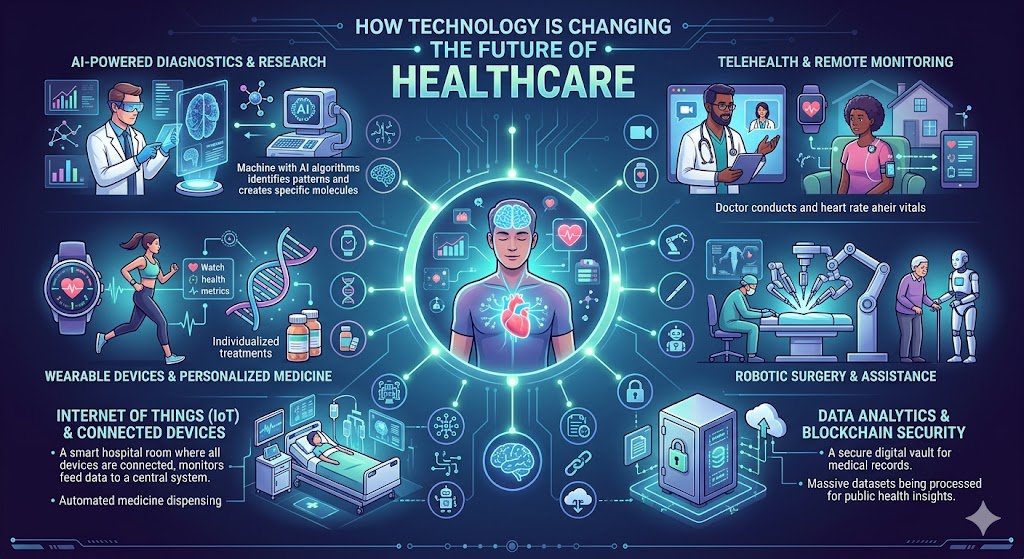
Technology is reshaping healthcare faster than almost any other industry. From AI-powered diagnostics to remote surgeries and wearable health trackers, the future of medicine is becoming more predictive, personalized, and accessible.
1. Artificial Intelligence in Diagnosis and Treatment
Artificial intelligence (AI) is helping doctors detect diseases earlier and more accurately. Machine learning models can analyze medical images like X-rays, MRIs, and CT scans to identify conditions such as cancer, fractures, or brain disorders within seconds.
Organizations like Google Health and IBM are developing AI systems that support clinicians by reducing diagnostic errors and improving treatment planning. AI is also being used to predict patient risks, such as heart attacks or diabetes complications, before symptoms become severe.
2. Telemedicine and Remote Healthcare
Telemedicine has made healthcare more accessible, especially after the global shift toward digital services. Patients can now consult doctors through video calls, mobile apps, and online platforms without visiting hospitals physically.
This is especially important in rural or underserved areas, where access to specialists is limited. Hospitals and health systems like World Health Organization support digital health expansion to bridge global healthcare gaps.
3. Wearable Devices and Real-Time Monitoring
Smartwatches and wearable health trackers are transforming how people monitor their own health. Devices can now track heart rate, sleep patterns, oxygen levels, and physical activity in real time.
This continuous monitoring helps detect early warning signs of conditions such as irregular heart rhythms or stress-related issues. It also encourages individuals to take more control over their daily health habits.
4. Robotics and Smart Surgery
Robotic-assisted surgery is improving precision in complex medical procedures. Surgeons can perform minimally invasive operations with greater accuracy, reducing recovery time and complications.
Hospitals like the Mayo Clinic are known for adopting advanced robotic systems in surgical care, enabling safer and more efficient treatments.
5. Big Data and Personalized Medicine
Healthcare systems now collect massive amounts of patient data. When analyzed properly, this data helps create personalized treatment plans based on a person’s genetics, lifestyle, and medical history.
This approach—known as precision medicine—allows doctors to move away from one-size-fits-all treatments and instead design therapies tailored to each patient.
Conclusion
Technology is transforming healthcare into a more proactive and patient-centered system. With AI, telemedicine, wearable devices, robotics, and big data, the future of healthcare promises faster diagnoses, better treatments, and improved global access to medical services.