Aging is a natural part of life, but growing older does not mean that declining memory, attention, or thinking ability is inevitable. Researchers are increasingly investigating how lifestyle factors—particularly physical activity—may help older adults maintain cognitive function and independence.
The latest research in 2026 is especially interesting because scientists are moving beyond the simple question of “Is exercise good for the brain?” They are now asking more specific questions:
Which type of exercise works best? How much is enough? Does combining different forms of exercise provide greater benefits? And could technology make exercise more accessible to older adults?
Recent systematic reviews and meta-analyses suggest that different forms of exercise may influence different aspects of cognitive health. Aerobic exercise, resistance training, mind-body exercise, multicomponent programs, and technology-assisted exercise are all being investigated. (Frontiers)


This emerging evidence doesn’t mean exercise can prevent dementia in every individual. Rather, it strengthens the case for viewing regular physical activity as one potentially important component of healthy aging.
Let’s take a closer look at what the newest research is telling us. 🌿
🔬 What Is Cognitive Health?
Cognitive health refers to how well the brain performs functions that allow us to interact with the world and manage everyday life.
These functions include:
- 🧠 Memory
- 🎯 Attention
- 🗣️ Language
- 🧩 Problem-solving
- 📋 Planning
- 🔄 Mental flexibility
- ⚡ Processing speed
- 👀 Visual-spatial skills
As people age, some changes can occur naturally. For example, it may take slightly longer to remember someone’s name or learn unfamiliar information.
Normal aging, however, is different from significant cognitive impairment.
Cognitive impairment can interfere with everyday activities and may be associated with conditions such as mild cognitive impairment (MCI) or dementia.
This distinction is important because current research is not suggesting that exercise makes the aging brain permanently immune to disease. Instead, researchers are examining whether physical activity can support cognitive performance and potentially contribute to healthier aging trajectories.
🚶 Why Could Exercise Affect the Brain?
The brain is a highly active organ that depends on healthy blood vessels, metabolism, oxygen delivery, and communication between neurons.
Exercise affects many systems throughout the body, which provides several plausible pathways through which physical activity could influence brain health.
Regular movement can support cardiovascular fitness, physical function, sleep, mood, and metabolic health. These factors are themselves connected to cognitive well-being.
Exercise may also stimulate biological processes involved in brain adaptation and maintenance.
However, scientists are still investigating exactly how different exercise programs influence different cognitive outcomes.
That’s why newer studies increasingly compare exercise type, intensity, duration, frequency, and combinations of activities rather than treating “exercise” as one single intervention.
🧪 What Does the Latest Research Show?
Several major studies published during 2026 have added to the evidence.
A June 2026 systematic review and meta-analysis examined 14 randomized controlled trials involving 4,013 adults aged 65 and older without diagnosed dementia. The researchers investigated combined exercise and nutritional interventions and found a small but statistically significant improvement in global cognitive function compared with control groups. However, they did not find significant improvements in specific areas such as executive function or visuoperceptual ability. (DOI)
That distinction matters.
A statistically significant improvement in overall cognition does not mean every participant experienced a noticeable improvement in memory or that exercise prevents dementia.
Instead, it suggests that lifestyle interventions involving exercise may have measurable effects on cognitive performance under certain circumstances.
🏃 1. Aerobic Exercise and Brain Health
Aerobic exercise includes activities that increase heart rate and breathing for a sustained period.
Examples include:
🚶 Brisk walking
🚴 Cycling
🏊 Swimming
💃 Dancing
🏃 Light jogging
🥾 Hiking
Aerobic activity has received considerable attention because cardiovascular health and brain health are closely connected.
A 2026 systematic review focusing on aerobic exercise in older adults with cognitive frailty analyzed randomized controlled trials to assess its effects on cognitive function. (Frontiers)
Another 2026 meta-analysis of exercise modalities found that aerobic exercise was particularly associated with improvements in cognitive outcomes among older adults with cognitive impairment, while resistance exercise showed stronger effects on muscle strength and physical performance. Combined aerobic and resistance programs showed potential benefits across both cognitive and physical domains. (Nature)
This supports an increasingly interesting idea:
The best exercise program may not be the one that targets the brain alone—it may be the one that supports the whole person.
🏋️ 2. Why Strength Training May Matter for Cognition
Strength training is sometimes overlooked when people talk about brain health.
Resistance exercise includes activities such as:
- Bodyweight exercises
- Resistance bands
- Weight machines
- Free weights
- Functional strength exercises
Its obvious benefits include maintaining muscle mass, strength, balance, and physical independence.
But researchers are also investigating whether resistance training may have cognitive benefits.
The 2026 meta-analysis mentioned above found a pattern in which resistance exercise primarily improved muscle strength and physical performance, while aerobic exercise was more strongly associated with cognitive outcomes. Combined programs potentially offered benefits across both areas. (Nature)
This makes practical sense from a healthy-aging perspective.
A strong body can help an older adult remain mobile and independent, while aerobic fitness supports cardiovascular health.
Rather than asking:
“Should older adults do cardio or strength training?”
A better question may be:
“How can older adults safely include both?”
🧘 3. Mind-Body Exercise Is Receiving Attention
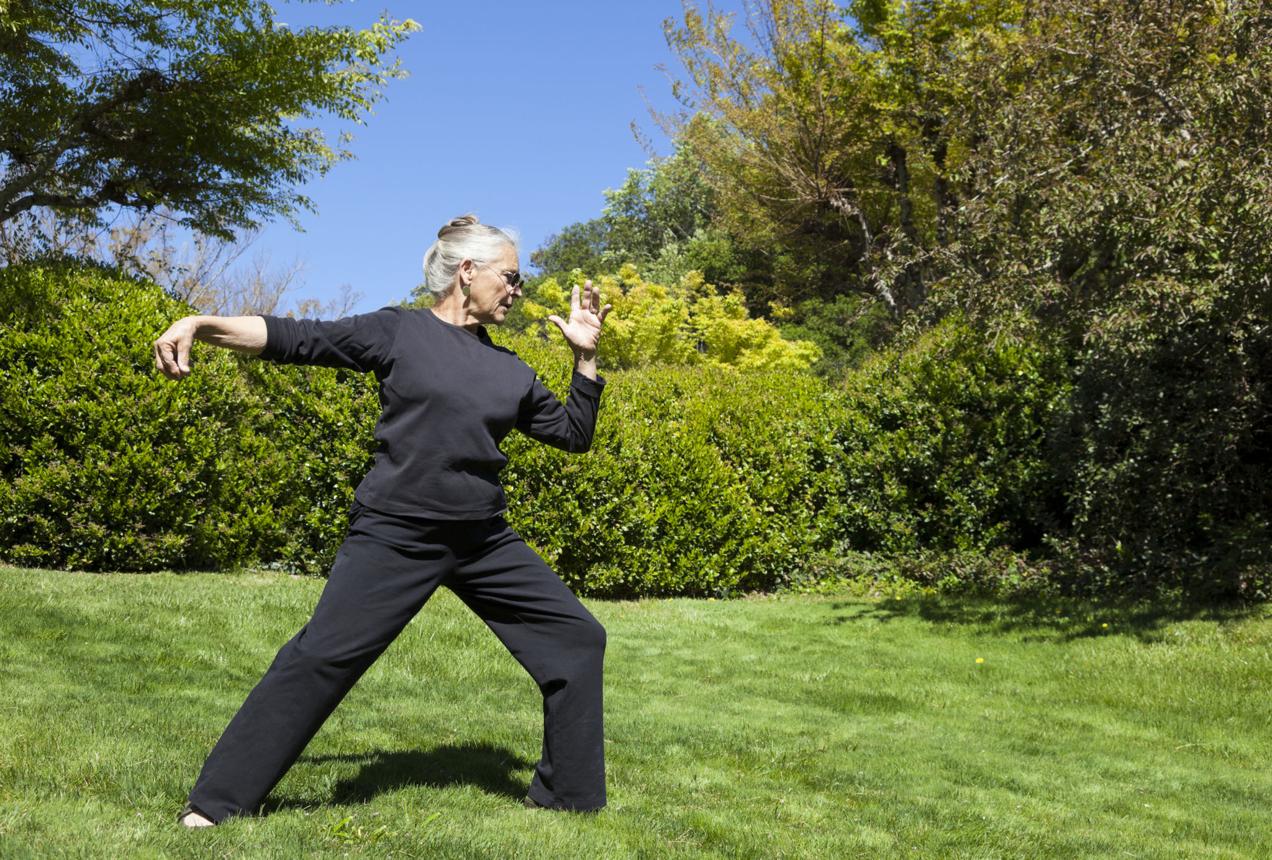
Yoga, tai chi, qigong, and similar practices are also being studied for cognitive health.
A 2026 network meta-analysis of 74 randomized controlled trials involving 5,578 older adults with mild cognitive impairment compared multiple exercise approaches.
The researchers reported favorable associations for mind-body exercise on global cognitive measures, while other forms of exercise showed advantages for particular outcomes. The authors emphasized that the evidence varies in certainty and that further head-to-head trials are needed. (Frontiers)


Mind-body activities can be especially interesting because they combine several elements:
🧘 Movement
🌬️ Breathing
🎯 Attention
⚖️ Balance
🌿 Relaxation
This means they may provide both physical and psychological stimulation.
🎯 4. Exercise May Affect Different Cognitive Skills Differently
One of the most important developments in recent research is the recognition that cognition isn’t one single ability.
Someone can have relatively good memory but struggle with attention. Another person may have reasonable memory but experience difficulty with planning or mental flexibility.
Researchers therefore measure different cognitive domains.
🧠 Memory
The ability to learn and recall information.
🎯 Attention
The ability to focus on relevant information.
🔄 Executive Function
Skills such as planning, decision-making, inhibition, and switching between tasks.
⚡ Processing Speed
How quickly the brain can take in and respond to information.
👀 Visuospatial Function
The ability to understand objects, distances, locations, and spatial relationships.
A 2026 systematic review examining exercise type and dose specifically for executive function in adults aged 65 and older reflects this increasingly detailed research approach. (Springer)
⏱️ 5. How Much Exercise Is Enough?
This is one of the questions older adults commonly ask.
Unfortunately, research doesn’t provide one universally perfect exercise prescription for every person.
Exercise studies use different:
- Durations
- Frequencies
- Intensities
- Activities
- Participant populations
- Cognitive assessments
One 2026 network meta-analysis of exercise interventions in older adults reported favorable findings across several exercise types and suggested a moderate-intensity pattern of 60–90 minutes per session, at least three times weekly, for 12 or more weeks. However, this should be interpreted as a research finding rather than a universal prescription for every older adult. (Frontiers)
Someone who is currently inactive should not suddenly attempt lengthy or strenuous sessions.
A gradual progression is usually more realistic.
For some people, starting with a short walk and gradually increasing activity can be far more sustainable than immediately attempting a demanding workout program.
🌳 6. Could Exercising Outdoors Provide Extra Benefits?
Another interesting area of research involves nature-based exercise.
A 2026 systematic review of randomized trials examined nature-based and technology-assisted exercise interventions in older adults, focusing on cognitive and mobility outcomes. The researchers noted growing interest in these approaches, partly because maintaining adherence to exercise programs can be difficult. (Springer)
Outdoor exercise may provide an additional sensory experience.
Imagine walking through a park:
🌳 Seeing trees
🐦 Hearing birds
☀️ Experiencing natural light
🌬️ Feeling the breeze
👣 Walking on different surfaces
The exercise itself is important, but the environment may make the activity more enjoyable and engaging.
And enjoyment matters.
An exercise program that someone enjoys may be easier to maintain than one that feels like an obligation.
🎮 7. Technology Is Changing Exercise for Older Adults
Technology-assisted exercise is another rapidly developing area.
Virtual reality, digital exercise programs, interactive games, online classes, wearable devices, and remote coaching are increasingly being studied.
A 2026 systematic review and Bayesian network meta-analysis examined 51 randomized controlled trials involving 3,673 participants and investigated digital physical exercise interventions for cognitive outcomes in older adults. (JMIR)
The potential advantages are significant.
Digital programs can potentially:
- Provide guided exercise at home
- Offer feedback
- Track activity
- Make exercise interactive
- Reduce transportation barriers
- Provide access to instructors
- Encourage adherence
But technology isn’t automatically better.
Older adults may face barriers involving device cost, digital literacy, internet access, accessibility, or comfort with technology.
The most useful digital exercise system is therefore likely to be one that is simple, accessible, safe, and enjoyable.
🧩 8. Why Combining Exercise Types Could Be Valuable
Imagine two exercise programs.
Program A
🚶 Walking only.
Program B
🚶 Walking
🏋️ Strength training
⚖️ Balance exercises
🧘 Mind-body movement
Program B targets more aspects of physical function.
Recent evidence increasingly supports the idea that different exercise modalities may offer different advantages.
The 2026 research on adults with cognitive impairment found modality-specific patterns, with aerobic exercise more strongly associated with cognitive outcomes, resistance exercise with physical performance, and combined exercise showing benefits across domains. (Nature)
This doesn’t prove that every person needs a complex program.
Instead, it suggests that variety may be valuable.
❤️ 9. Exercise, Independence, and Quality of Life
Cognitive health doesn’t exist in isolation.
An older adult’s ability to remain independent depends on many interconnected abilities.
Consider everyday activities such as:
🛒 Shopping
🍳 Preparing meals
🚗 Traveling
💊 Managing medications
💰 Handling finances
📞 Communicating with family
🏠 Maintaining a home
Physical strength, balance, mobility, attention, and memory can all contribute to independence.
This is why exercise research shouldn’t focus only on test scores.
A meaningful outcome is whether an older person can continue doing the things that matter to them.
🧠 10. Exercise and Mild Cognitive Impairment
Mild cognitive impairment, or MCI, describes cognitive difficulties that are greater than expected for normal aging but don’t necessarily prevent a person from carrying out everyday activities independently.
MCI is an important area of research because some individuals remain stable while others progress to dementia.
The 2026 network meta-analysis involving older adults with MCI found potentially beneficial effects across several exercise categories, but the strongest effects differed depending on the cognitive outcome being measured. The researchers also emphasized limitations such as variation between studies and the need for better head-to-head trials. (Frontiers)
This is an important scientific message:
There is no single “magic exercise” for MCI.
Different individuals may respond differently, and researchers are still determining the most effective combinations and doses.
🥗 11. Exercise Plus Nutrition: An Emerging Combination
Exercise doesn’t operate independently of other lifestyle factors.
The June 2026 systematic review of combined exercise and nutritional interventions found a small but significant improvement in global cognition among older adults compared with controls. (DOI)
This suggests that researchers are increasingly interested in multidomain approaches.
Instead of studying exercise alone, future interventions may combine:
🏃 Physical activity
🥗 Nutrition
😴 Sleep
🧠 Cognitive stimulation
👥 Social engagement
❤️ Cardiovascular risk management
The brain is influenced by the overall environment in which a person lives.
🌟 12. What Does This Mean for Older Adults?
The emerging evidence provides an encouraging message:
It’s never necessary to think of exercise as being only about muscles and fitness.
Movement may contribute to a broader healthy-aging strategy.
A practical weekly routine might include:
🚶 Aerobic Activity
Walking, cycling, swimming, or another preferred activity.
🏋️ Strength Training
Exercises targeting major muscle groups.
⚖️ Balance Work
Simple balance exercises performed safely.
🧘 Mind-Body Movement
Yoga, tai chi, or similar activities.
🌳 Outdoor Activity
When weather and accessibility allow.
🧠 Mental Engagement
Reading, learning, social activities, hobbies, or other cognitively stimulating pursuits.
The goal is not perfection.
The goal is consistency and sustainability.
⚠️ Exercise Should Be Individualized
Older adults have very different health histories and physical abilities.
Someone who has exercised throughout adulthood may be able to tolerate considerably more activity than someone who has been sedentary for years.
Before starting a new exercise program, particularly if there are significant medical conditions, mobility limitations, balance problems, chest symptoms, or other concerns, discussing the appropriate activity level with a healthcare professional can be important.
Safety should always come before intensity.
And remember:
More exercise isn’t automatically better.
The right amount is the amount that can be performed safely and maintained over time.
🔬 What Researchers Still Don’t Know
Despite promising findings, many questions remain unanswered.
Researchers still need to determine:
❓ Which exercise is best for specific cognitive problems?
❓ How long do benefits last?
❓ Does starting exercise decades earlier provide greater protection?
❓ What combination of aerobic and resistance exercise is optimal?
❓ Can exercise meaningfully delay dementia progression?
❓ How do genetics influence individual responses?
❓ What role do sleep and nutrition play alongside exercise?
❓ Can wearable technology personalize exercise programs?
❓ How can researchers improve long-term adherence?
These questions are important because a promising association isn’t the same as proof of causation.
📱 The Future: Personalized Exercise for Brain Health
The next generation of exercise research may become increasingly personalized.
Instead of prescribing the same program to every older adult, researchers could potentially use information about:
- Age
- Fitness level
- Mobility
- Cognitive profile
- Sleep
- Medical history
- Exercise preferences
- Lifestyle
- Progress over time
to create individualized programs.
Wearable devices could potentially monitor activity patterns, while digital platforms could provide feedback and reminders.
Artificial intelligence may eventually help researchers identify patterns in large datasets and personalize recommendations.
But technology should remain a tool—not a replacement for human judgment and professional care.
🌿 A Simple Brain-Healthy Movement Routine
For someone who wants to become more active, a simple approach could look like this:
Monday: 🚶 20–30 minutes of comfortable walking
Tuesday: 🏋️ Gentle strength exercises
Wednesday: 🧘 Yoga or tai chi
Thursday: 🚶 Walking or another aerobic activity
Friday: 🏋️ Strength + balance exercises
Saturday: 🌳 Longer outdoor walk or enjoyable recreational activity
Sunday: 🌿 Gentle movement and recovery
This is an example, not a medical prescription.
The ideal program should be adjusted according to an individual’s health, fitness, preferences, and professional guidance when necessary.
💡 10 Practical Tips for Supporting Cognitive Health Through Exercise
1. Start Slowly
If you’re inactive, begin with manageable amounts.
2. Choose Activities You Enjoy
Enjoyment increases the likelihood of continuing.
3. Add Variety
Consider combining aerobic, strength, balance, and flexibility activities.
4. Stay Consistent
A sustainable routine is more valuable than occasional intense workouts.
5. Exercise With Others
Walking groups and classes can add social interaction.
6. Try Outdoor Activity
A park or garden can make movement more enjoyable.
7. Don’t Ignore Strength
Maintaining muscle is an important part of healthy aging.
8. Challenge Your Balance Safely
Balance activities can support physical independence.
9. Track Progress
A simple activity log can help establish consistency.
10. Listen to Your Body
Pain, dizziness, unusual breathlessness, or other concerning symptoms should not simply be ignored.
🧠 Final Thoughts: Exercise Is More Than Physical Fitness
The latest research is painting an increasingly sophisticated picture of the relationship between exercise and cognitive health.
Studies published in 2026 suggest that different types of exercise may influence different aspects of cognitive and physical function, rather than there being one universally superior activity. Aerobic exercise, resistance training, mind-body exercise, multicomponent programs, outdoor activity, and technology-assisted exercise are all areas of active investigation. (Frontiers)
Perhaps the most encouraging message is also the simplest:
Movement matters. ❤️
An older adult doesn’t necessarily need to become an athlete to support healthy aging. Walking regularly, maintaining muscle strength, practicing balance, participating in enjoyable activities, and staying physically engaged can all be meaningful parts of an active lifestyle.
At the same time, science is still evolving. Current research supports exercise as a promising component of healthy aging, but it does not establish that exercise alone can prevent dementia or reverse cognitive disease.
The future of cognitive-health research will likely focus increasingly on personalized, multidomain strategies that combine physical activity with nutrition, sleep, social connection, cognitive engagement, and appropriate healthcare.
For older adults, the takeaway is encouraging:
🌱 Keep moving.
🧠 Keep learning.
👥 Stay connected.
🥗 Support overall health.
❤️ Choose activities you can enjoy and sustain.
Healthy aging isn’t about stopping the clock.
It’s about making the years ahead as active, independent, and meaningful as possible.