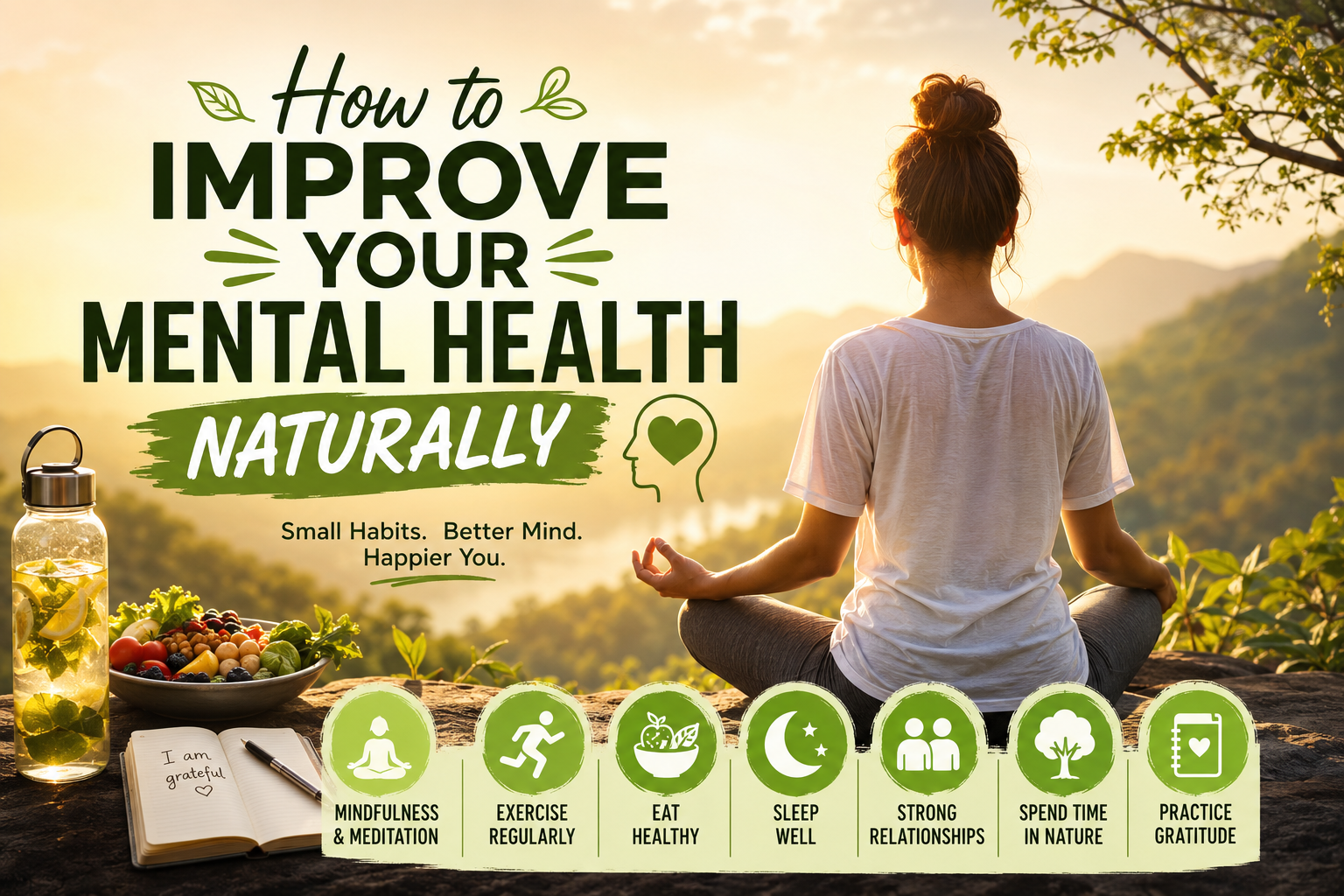
Mental health is just as important as physical health, yet it often doesn’t receive the attention it deserves. Stress, anxiety, and the pressures of everyday life can take a toll on our emotional well-being. The good news is that you don’t always need drastic changes to feel better. Small, consistent habits can naturally improve your mental health and help you build resilience over time.
In this article, you’ll discover practical, science-backed ways to improve your mental health naturally and create a healthier, happier lifestyle.
🧠 What Is Mental Health?
Mental health refers to your emotional, psychological, and social well-being. It affects how you think, feel, and act. It also influences how you handle stress, relate to others, and make decisions.
Good mental health doesn’t mean feeling happy all the time. Instead, it means having the ability to cope with life’s challenges while maintaining emotional balance.
🌞 1. Start Your Day with Morning Sunlight
Exposure to natural sunlight helps regulate your body’s internal clock and boosts serotonin production—a hormone linked to happiness and calmness.
Benefits:
- ☀️ Improves mood
- 😴 Supports better sleep
- ⚡ Increases energy
- 🧠 Enhances focus
Tip: Spend at least 15–30 minutes outdoors every morning.
🏃 2. Exercise Regularly
Physical activity is one of the most effective natural treatments for stress and anxiety. Exercise releases endorphins, often called the “feel-good hormones.”
Best Exercises for Mental Health:
- 🚶 Walking
- 🧘 Yoga
- 🚴 Cycling
- 🏊 Swimming
- 💃 Dancing
Aim for 30 minutes of exercise, five days a week.
🥗 3. Eat a Brain-Healthy Diet
Your gut and brain are closely connected. Eating nutritious foods can positively impact your mood and mental clarity.
Foods That Support Mental Health
🥑 Healthy fats
- Avocados
- Nuts
- Olive oil
🐟 Omega-3 rich foods
- Salmon
- Sardines
- Flaxseeds
🥬 Leafy vegetables
- Spinach
- Kale
- Broccoli
🍓 Fruits
- Blueberries
- Oranges
- Bananas
🥜 Protein sources
- Eggs
- Beans
- Lentils
Avoid:
- Excess sugar
- Processed foods
- Excess alcohol
- Too much caffeine
😴 4. Prioritize Quality Sleep
Poor sleep can increase anxiety, depression, and irritability.
Better Sleep Tips
🌙 Maintain a regular sleep schedule.
📱 Avoid screens one hour before bed.
🛏️ Keep your bedroom cool and dark.
☕ Limit caffeine after afternoon hours.
📖 Read a book before sleeping.
Adults should aim for 7–9 hours of sleep every night.
🧘 5. Practice Mindfulness and Meditation
Mindfulness helps you stay present instead of worrying about the future or dwelling on the past.
Benefits
- ❤️ Reduces anxiety
- 😊 Improves emotional control
- 🧠 Enhances concentration
- 🌿 Lowers stress hormones
Start with just 5–10 minutes daily.
Simple breathing exercise:
- Inhale for 4 seconds.
- Hold for 4 seconds.
- Exhale for 6 seconds.
- Repeat for 5 minutes.
💧 6. Stay Hydrated
Even mild dehydration can affect mood, memory, and concentration.
Daily Goal
Drink around 2–3 liters of water each day, adjusting for your activity level, climate, and individual needs.
Signs of dehydration include:
- Headaches
- Fatigue
- Poor concentration
- Irritability
📵 7. Reduce Social Media Time
Constant scrolling can increase comparison, stress, and information overload.
Healthy Digital Habits
- 📱 Set app time limits.
- 🌳 Spend more time outdoors.
- 📚 Read books instead.
- 👨👩👧 Connect with family and friends.
Try taking one “digital detox” day each week.
❤️ 8. Build Strong Relationships
Humans are naturally social. Healthy relationships provide emotional support and reduce feelings of loneliness.
Ways to strengthen relationships:
- Call loved ones regularly.
- Meet friends in person.
- Join clubs or community groups.
- Volunteer for a local cause.
- Practice active listening.
Quality matters more than quantity.
🙏 9. Practice Gratitude
Gratitude shifts your focus from what’s missing to what’s going well.
Every evening, write down:
- 🌸 Three things you’re grateful for.
- ⭐ One achievement from the day.
- 😊 One thing you’re looking forward to tomorrow.
Over time, this simple habit can improve optimism and emotional well-being.
🌳 10. Spend Time in Nature
Nature has a calming effect on the brain and can lower stress levels.
Ideas include:
- Walking in a park
- Gardening
- Hiking
- Visiting a beach
- Sitting under a tree
Even 20 minutes in nature can help improve mood.
🚫 Habits That Can Harm Mental Health
Avoid or reduce:
- ❌ Chronic sleep deprivation
- ❌ Excess alcohol or drug use
- ❌ Smoking
- ❌ Constant negative self-talk
- ❌ Social isolation
- ❌ Excessive screen time
- ❌ Poor diet
- ❌ Chronic stress without healthy coping strategies
🌈 Create a Daily Mental Wellness Routine
Here’s a simple daily plan:
Morning 🌅
- Drink a glass of water.
- Get sunlight.
- Stretch or exercise.
- Eat a healthy breakfast.
Afternoon ☀️
- Take short movement breaks.
- Eat balanced meals.
- Stay hydrated.
- Spend a few minutes outside.
Evening 🌙
- Limit screen time.
- Practice gratitude.
- Read or meditate.
- Go to bed at a consistent time.
💡 When to Seek Professional Help
Natural habits can make a meaningful difference, but they’re not a substitute for professional care when it’s needed. If feelings of sadness, anxiety, hopelessness, or emotional distress last for several weeks, interfere with work, school, relationships, or daily life, or you have thoughts of harming yourself, it’s important to reach out to a qualified mental health professional as soon as possible. Early support can make treatment more effective.
Seeking help is a sign of strength, not weakness.
🌟 Final Thoughts
Improving your mental health naturally doesn’t require perfection. Small, consistent habits—like exercising regularly, eating nourishing foods, sleeping well, practicing mindfulness, staying connected with others, and spending time in nature—can add up to meaningful improvements in your emotional well-being.
Start with one or two habits that feel manageable, and build from there. Over time, these daily choices can help you feel calmer, more resilient, and better equipped to handle life’s challenges.